 Everest Climbing Tours
Sagarmatha National Park: What It Protects and What It Costs to Enter
Sagarmatha National Park covers the high Khumbu country that the Nepal-side Everest treks and climbs pass through. This page sets out what the park protects, which animals and birds live in it, what the entry permit costs, how the Khumbu Pasang Lhamu Rural Municipality fee sits beside it and what the guide rule actually says for the Everest region. Where sources disagree, both figures are given with the source named. The bookable trips are compared on all Everest climbing tours.
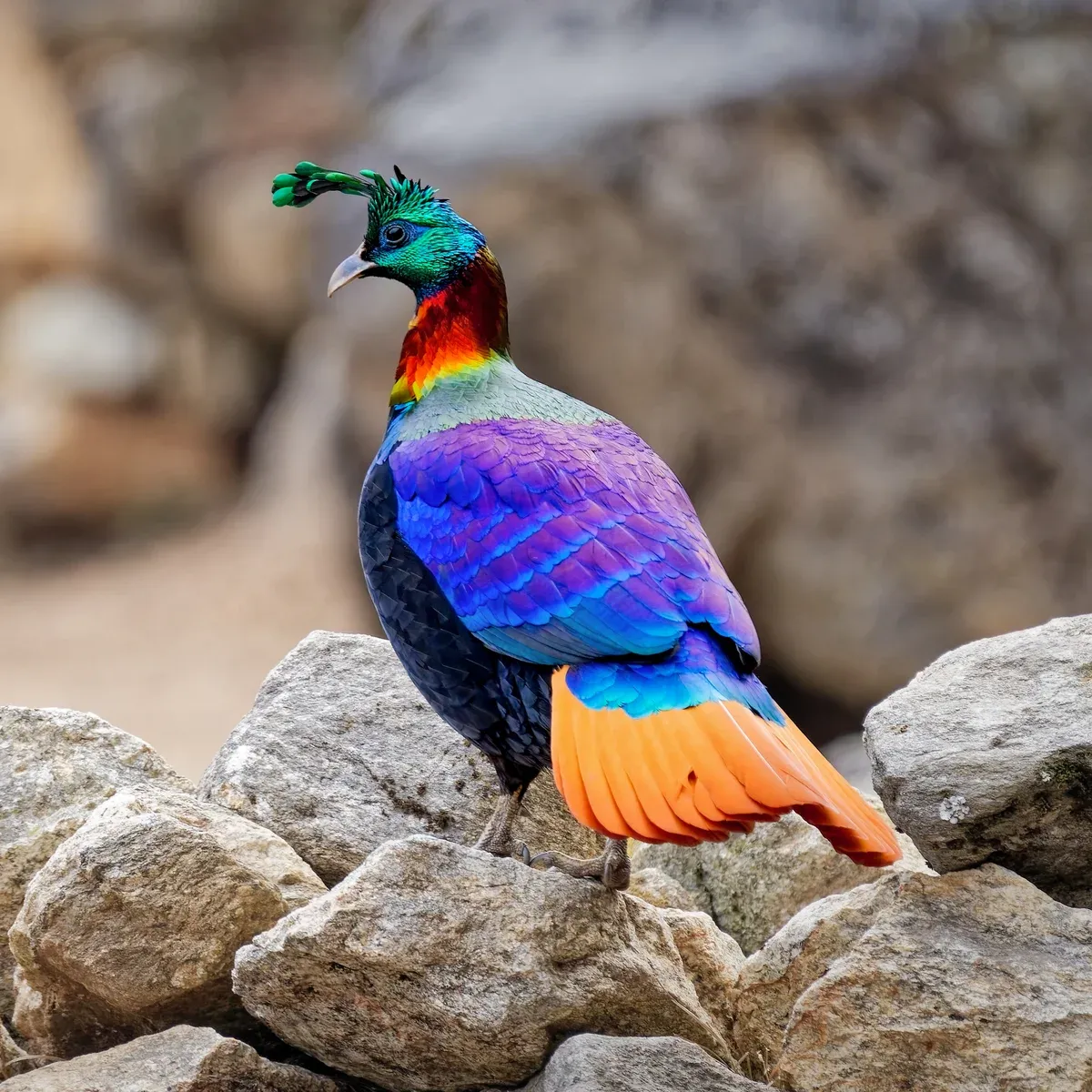
A Himalayan monal in Sagarmatha National Park. Photo: Pratap Gurung, CC BY-SA 4.0, via Wikimedia Commons
Quick answer The park in brief
Sagarmatha National Park is a 1,148 km2 protected area in Nepal's Khumbu region, established on 19 July 1976 and listed as a Natural World Heritage Site in 1979. Foreign trekkers pay an entry permit of NPR 3,000 and a separate Khumbu Pasang Lhamu Rural Municipality fee, reported at NPR 2,000 by Hop Nepal and NPR 3,000 by Everest Trekking Routes. The park runs from 2,845 m at Monjo to the 8,848.86 m summit of Everest.
Key takeaways
- The park holds Everest, Lhotse, Cho Oyu, Nuptse, Ama Dablam, Thamserku and Pumori, with snow leopards recorded above 3,500 m. See wildlife on the trail.
- Budget trekkers can see the park on the Everest Base Camp Trek 14 Days, which includes both entry permits, Lukla flights and a guide.
- A shorter taste of the park is the Everest Panorama Trek, an 8-day walk that turns back at Tengboche at 3,870 m.
- For the full permit picture and the guide rule, go to entry fee, municipality fee and the guide rule, or read the Everest Base Camp trek page.
What the Park Protects
Sagarmatha National Park is the protected area that surrounds Mount Everest and the whole upper Khumbu trail. The figures below come from the Nepal tourism board site and Wikipedia.
The Core Facts
The park was established on 19 July 1976 and became the country's first national park inscribed as a Natural World Heritage Site in 1979, under criterion vii according to Wikipedia's Nepal list, while another source says criterion ix. Wikipedia gives the area as 1,148 km2, though the Centre for Environmental Education's park page states about 124,400 ha, which is 1,244 km2, in its own introduction. Wikipedia also notes a 275 km2 buffer zone added in 2002, a date the Nepal tourism site repeats, though another source dates it to 2003.
The buffer zone runs between Lukla and Monju, so trekkers cross it before they reach the park gate itself. Any trip from the comparison of Everest tours crosses this ground, from the Everest Base Camp Trek 14 Days to the full Everest Expedition Nepal.
| Fact | Figure | Source |
|---|---|---|
| Established | 19 July 1976 | Nepal tourism board |
| World Heritage listing | 1979, criterion vii | Wikipedia Nepal list |
| Park area | 1,148 km2 (another source says 1,244 km2) | Wikipedia / Centre for Environmental Education |
| Buffer zone | 275 km2, added 2002 (one source says 2003) | Wikipedia and Nepal tourism board |
| Elevation range | 2,845 m at Monjo to 8,848 m at the Everest summit | Wikipedia |
| Sherpa residents | About 3,500 in 2005 (Wikipedia park article) or about 6,000 in 20 villages (Wikipedia World Heritage list) | Wikipedia, both pages |
Peaks, Glaciers and Sherpa Villages
Everest sits at 8,848.86 m (29,031.7 ft) after the joint Nepalese and Chinese survey of 2020, and Wikipedia names Lhotse, Cho Oyu, Thamserku, Nuptse, Ama Dablam and Pumori among the park's other peaks. The Khumbu Glacier and the Khumbu Icefall at 5,486 m (17,999 ft) lie on the mountain's Nepalese slopes. People live here too.
Wikipedia's World Heritage entry counts about 6,000 Sherpas in 20 villages who have lived in the park for roughly four centuries, while the park article gives a lower count of about 3,500 residents as of 2005. Namche Bazaar, the main village, sits at 3,440 m and holds a weekly market on Saturday mornings. Higher up the trail, Tengboche Monastery at 3,867 m is the largest gompa in the Khumbu region.
The 2011 census counted 3,456 people in 912 houses across Khumbu and 347 registered hotels and tea houses in 13 villages. The Sherpa are Nyingma Buddhists, and their villages, seasonal settlements and trails sit inside the protected area.
Sources: Wikipedia, Mount Everest, Wikipedia, Sagarmatha National Park
Wildlife on the Trail
The park's animals range from red pandas in the lower forests to snow leopards in the high valleys. Counts come from Discover Wildlife and Wikipedia.
Mammals You May See
Wikipedia names Himalayan tahr, Himalayan serow, musk deer and snow leopard among the park's mammals, with the snow leopard living above 3,500 m. Discover Wildlife says the park holds 28 mammal species and adds red pandas, which live in bamboo-rich forests at around 3,500 m, and reports that snow leopards have returned after disappearing for around 40 years. Smaller and far more often seen are Royle's pika and woolly hares, both listed by Discover Wildlife.
- Himalayan tahr
- Musk deer
- Himalayan serow, recorded by Wikipedia
- Snow leopard, above 3,500 m, back after an absence of about 40 years per Discover Wildlife
- Red panda in bamboo forest at around 3,500 m
- Royle's pika and woolly hares
Birds and Other Wildlife
Discover Wildlife counts over 150 bird species in the park, while Wikipedia's park article gives 208 and a 2016 survey booklet cited there lists 219, so the count depends on which source you trust. Named birds include bar-headed geese, Tibetan snowcock and blood pheasant. The Himalayan monal, called danphe in Nepal, is the national bird and lives between 2,100 and 4,500 m.
Discover Wildlife also counts six amphibian and seven reptile species. The Everest Panorama Trek stays below 3,870 m, the lower part of the park.
Sagarmatha National Park (UNESCO/NHK)
The World Heritage film on the park. Third-party video by UNESCO. This site did not shoot it and has no relationship with the creator.
Entry Fee, Municipality Fee and the Guide Rule
Every foreign trekker in the park pays a park entry permit plus a Khumbu Pasang Lhamu Rural Municipality fee. Sources disagree on the second fee and on the tax question, so both sides are given here.
The Two Fees and Where You Pay
Everest Trekking Routes lists the Sagarmatha National Park entry permit at NPR 3,000 for foreigners and NPR 1,500 for SAARC nationals, paid between Monjo and Jorsalle or in Kathmandu. The Himalayan Times reported in 2017 the same NPR 3,000 for non-SAARC visitors but added 13% tax, a figure Hop Nepal and Everest Trekking Routes leave out, so treat the tax line as disputed. For the Khumbu Pasang Lhamu Rural Municipality fee, Hop Nepal lists NPR 2000 per foreigner while Everest Trekking Routes says it was raised to NPR 3,000 since 2026, and the fee is bought in cash in a building on the right just after the Lukla trek starting gate.
The Longest Way Home rounds the whole permit set to $60 total, $30 for the park and $30 for the municipality fee. You must state your planned route before buying the municipality permit, and the same permit covers other Everest region treks. Trekkers who want the paperwork handled can book a package such as the Everest Base Camp Trek 14 Days at $1,800 per person, which includes the park entry permit and the municipality fee, or the Everest Base Camp Trek Lodge to Lodge at $1,475 per person, which includes all required permits and Lukla flights.
| Fee | Amount | Where you pay |
|---|---|---|
| Sagarmatha National Park entry permit, foreigner | NPR 3,000 (The Longest Way Home puts it at $30) | Park permit office between Monjo and Jorsalle, or Kathmandu |
| Sagarmatha National Park entry permit, SAARC national | NPR 1,500 | Same offices |
| Tax on the park fee | The Himalayan Times reported 13% tax, other sources list none | Not stated |
| Khumbu Pasang Lhamu Rural Municipality fee | NPR 2,000 per Hop Nepal or NPR 3,000 since 2026 per Everest Trekking Routes | Cash, building on the right after the Lukla trek starting gate |
| TIMS card | No longer required in the Everest region, scrapped per Hop Nepal (2023) and Everest Trekking Routes | Not applicable in Khumbu |
The Guide Rule and the Khumbu Exception
From April 1, 2023 Nepal required foreign trekkers in TIMS-covered areas to hire a licensed guide from a government-registered agency, and the Nepal Tourism Board said it would not issue TIMS cards to solo trekkers without one. The Solukhumbu region rejected the ruling, does not accept TIMS cards and says guides are not mandatory there. Dawa Steven Sherpa told ExplorersWeb the ban does not apply in practice to the Everest area, where solo trekkers simply pay the municipal fee in Lukla and the park fee at the entrance.
The Longest Way Home adds that a 2025 local attempt to ban independent trekkers, meant to protect teahouse jobs, was overridden by large tour operators and no ban is described as in effect. TAAN's fine list was 12,000 rupees for a trekker without a guide or TIMS and 10,000 rupees for an agency issuing a TIMS without a guide. Helicopter tours need no TIMS or guide unless it is a one-way flight under the 2023 TAAN rules, so the Everest Base Camp Helicopter Landing at $1,600 per person plus $50 in extra charges sits outside the trekking rule, though its listing excludes national park fees and municipal tax.
Anyone walking the park independently should carry both fees in cash and confirm current rules locally, because the picture is a patchwork. For permit costs in a wider budget context, see the section on what it costs, permits and fees on the homepage.
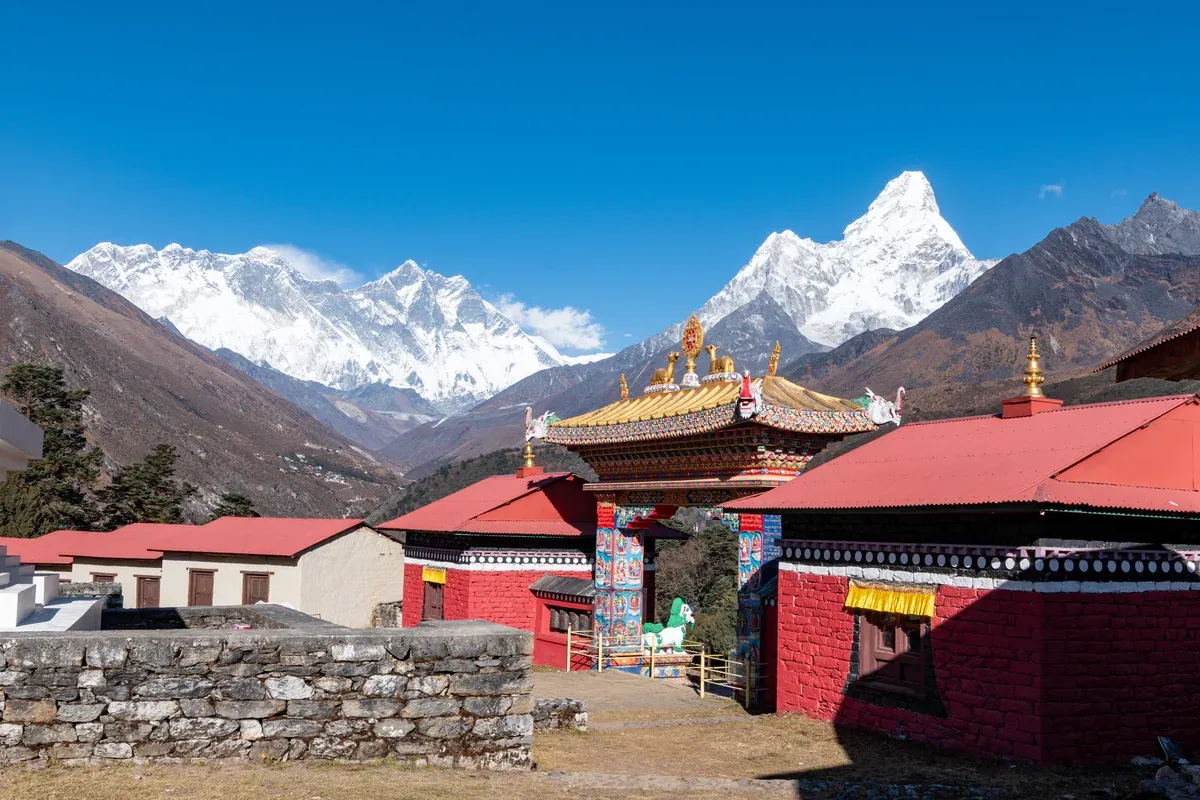
Tengboche Monastery with Everest, Lhotse and Ama Dablam. Photo: Rohit Sharma, CC BY-SA 4.0, via Wikimedia Commons
Tips for Visiting the Park
Do
- Do carry cash for both permits, because the municipality fee is bought in cash near Lukla and the park fee is taken at the park gate, per Everest Trekking Routes.
- Do state your planned route before buying the rural municipality permit, because the same permit then covers other Everest region treks without repurchase.
- Do spend acclimatization nights around Namche Bazaar at 3,440 m, the park's main village, so your body adjusts before you climb higher.
- Do bring binoculars or a zoom lens, because Himalayan tahr, musk deer and blood pheasant are among the park's wildlife.
- Do book a package that names its permits if you dislike paperwork, such as the Everest Base Camp Trek 14 Days, which includes both entry fees.
Don't
- Don't expect a TIMS checkpoint in Khumbu, because Hop Nepal and Everest Trekking Routes both say the card is no longer required in the Everest region.
- Don't assume a guide is legally compulsory here, because Solukhumbu rejected the national rule and says guides are not mandatory there, though sources disagree on current enforcement.
- Don't budget NPR 2,000 for the municipality fee without checking, because Everest Trekking Routes reports the fee at NPR 3,000 since 2026.
- Don't count on seeing a snow leopard or red panda, because both live around or above 3,500 m in remote habitat and Discover Wildlife notes the leopard vanished for roughly 40 years before returning.
Sagarmatha National Park Questions
Which Himalayan peak is called Sagarmatha?
Mount Everest is Sagarmatha in Nepali, and the park takes its name from the mountain. Everest stands 8,848.86 m (29,031.7 ft) after the 2020 joint Nepalese and Chinese survey, though Tibet Travel still gives 8,844.43 m. More background is on the Mount Everest height page.
Which is the highest altitude national park?
Sagarmatha National Park is often cited among the highest, with an elevation range from 2,845 m at Monjo to 8,848 m at Everest's summit, but the facts here do not rank it against other countries' parks. You can read how trekkers experience the range on the Everest Base Camp page.
Why is Mount Everest culturally important?
The mountain is Sagarmatha to Nepalis and sits in the homeland of the Sherpa, Nyingma Buddhists who have lived in the park for roughly four centuries, with about 6,000 people in 20 villages per Wikipedia's World Heritage entry. Their culture is on show at Tengboche Monastery, the largest gompa in Khumbu.
How much is the Sagarmatha National Park entry fee?
The park entry permit is NPR 3,000 for foreigners and NPR 1,500 for SAARC nationals per Everest Trekking Routes, with The Himalayan Times adding 13% tax in 2017, a figure other sources omit. The Everest Base Camp 12 Days trek at $955 per person includes national park permits in its price.
Do I need a guide to trek in Sagarmatha National Park?
Nepal's national rule from April 1, 2023 requires a licensed guide in TIMS-covered areas, but Solukhumbu rejected it, does not accept TIMS cards and says guides are not mandatory, so the picture for the Everest region is mixed. Compare guided options in the comparison table on the homepage.
Where is the park permit checked?
Everest Trekking Routes says the park permit is bought and checked between Monjo and Jorsalle, while the municipality permit is bought in cash just after the Lukla trek starting gate. The route between the two towns is described on the Everest Base Camp trek page.