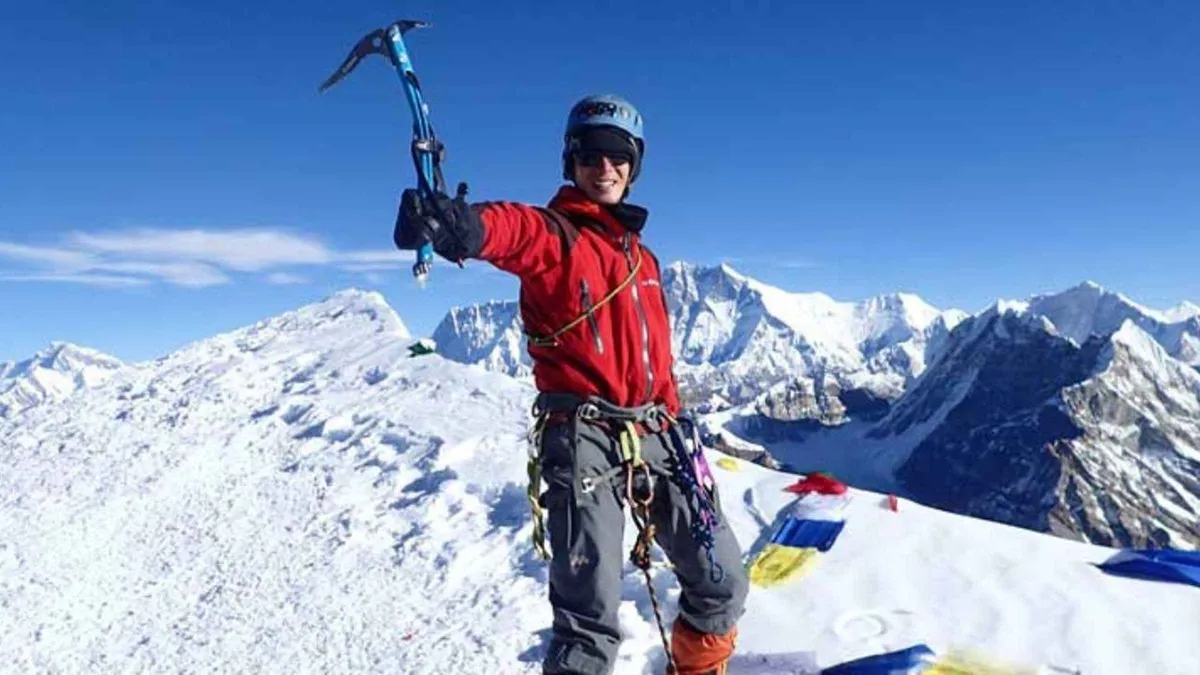
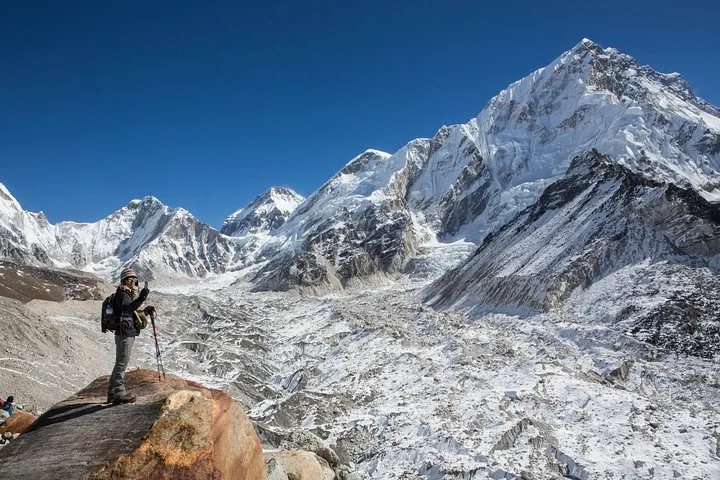
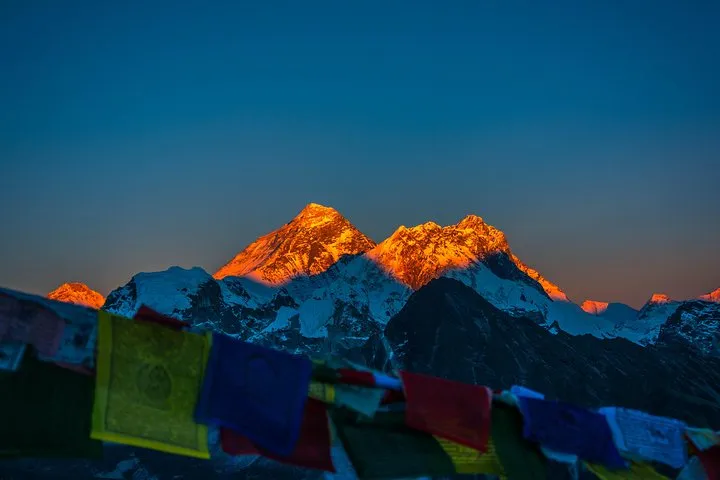
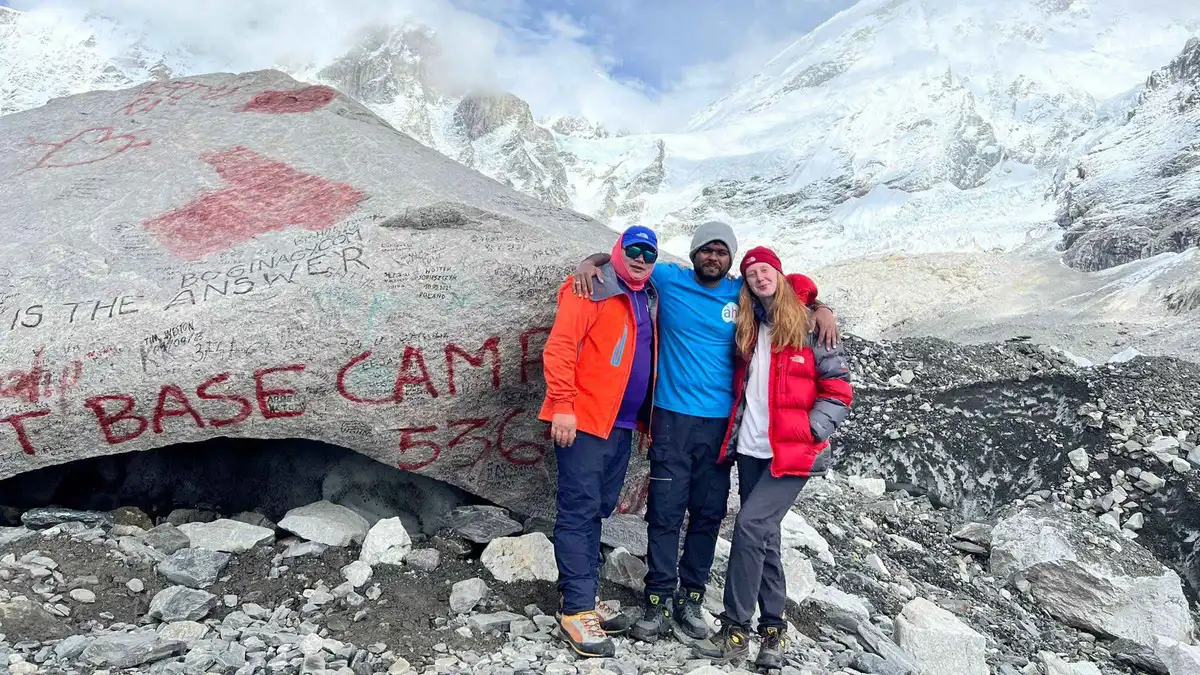
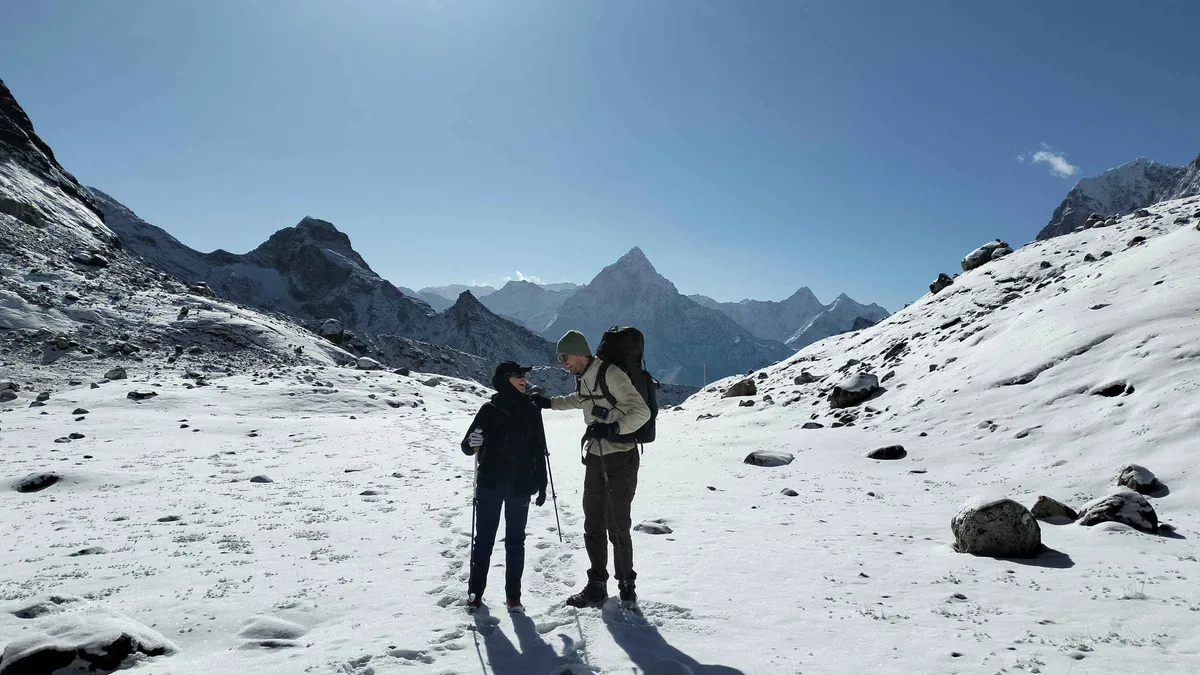
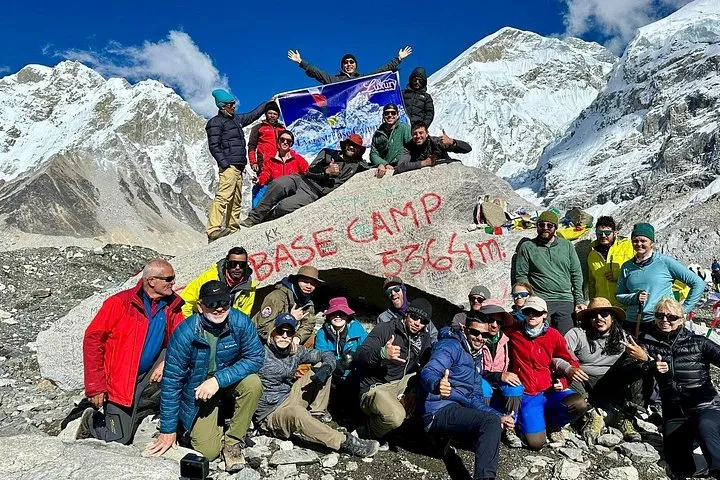
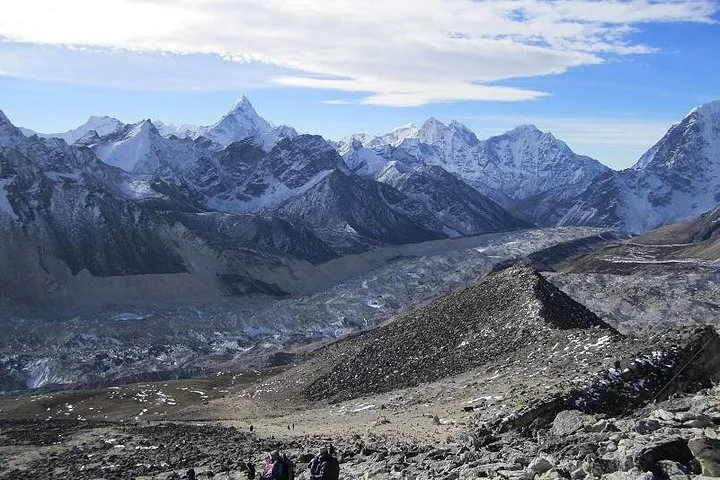
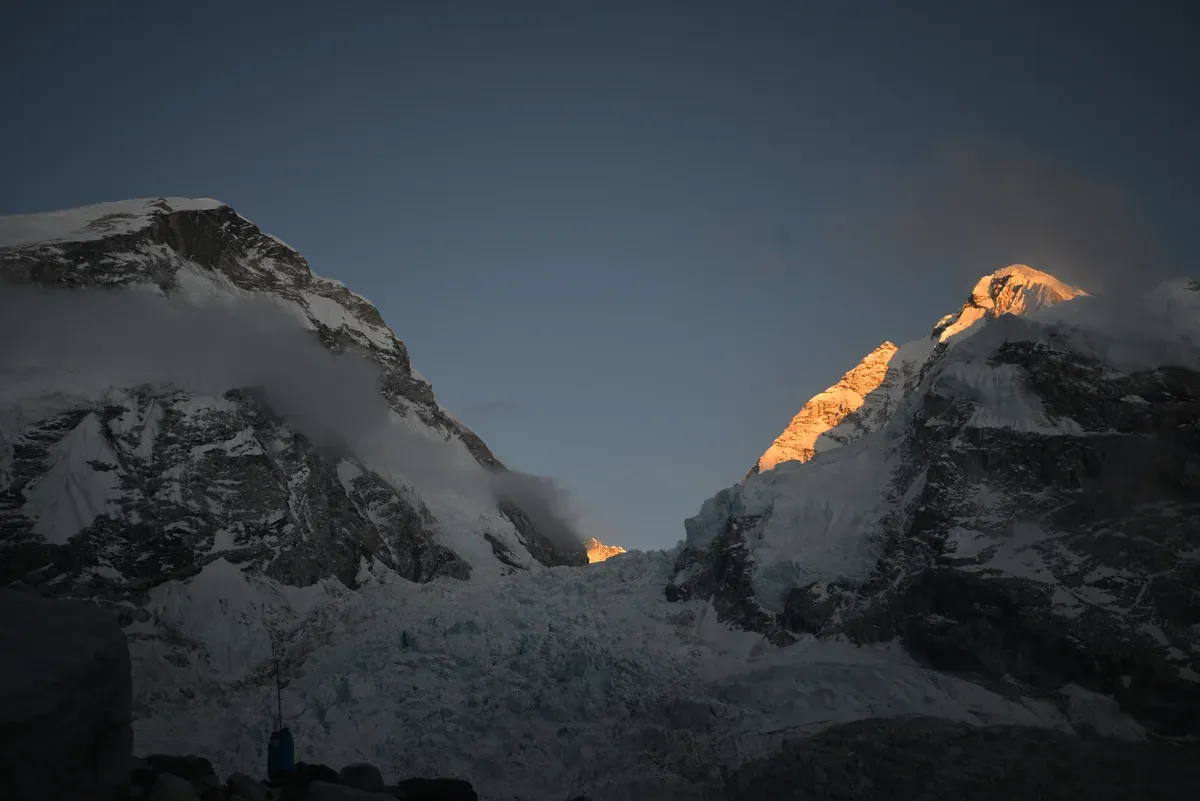
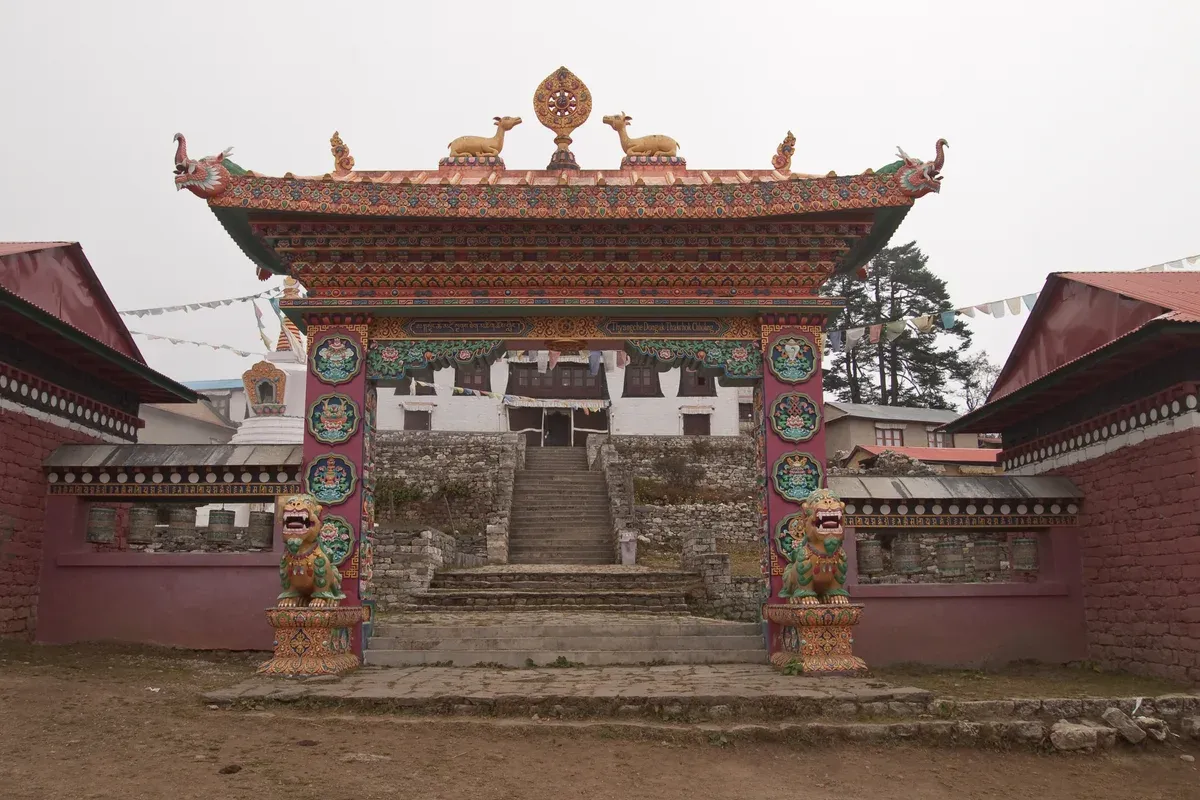
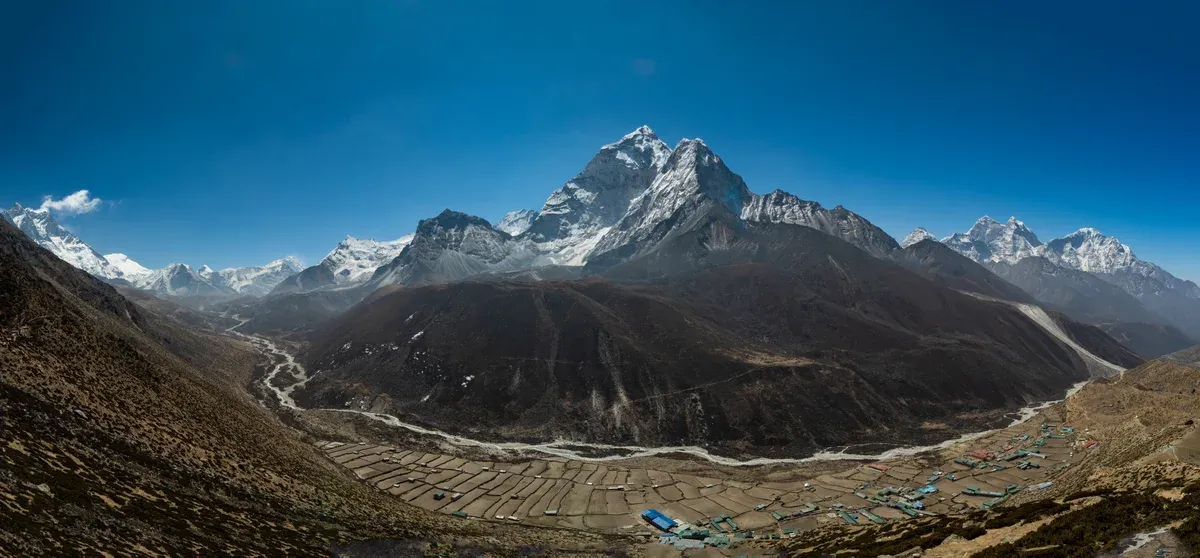
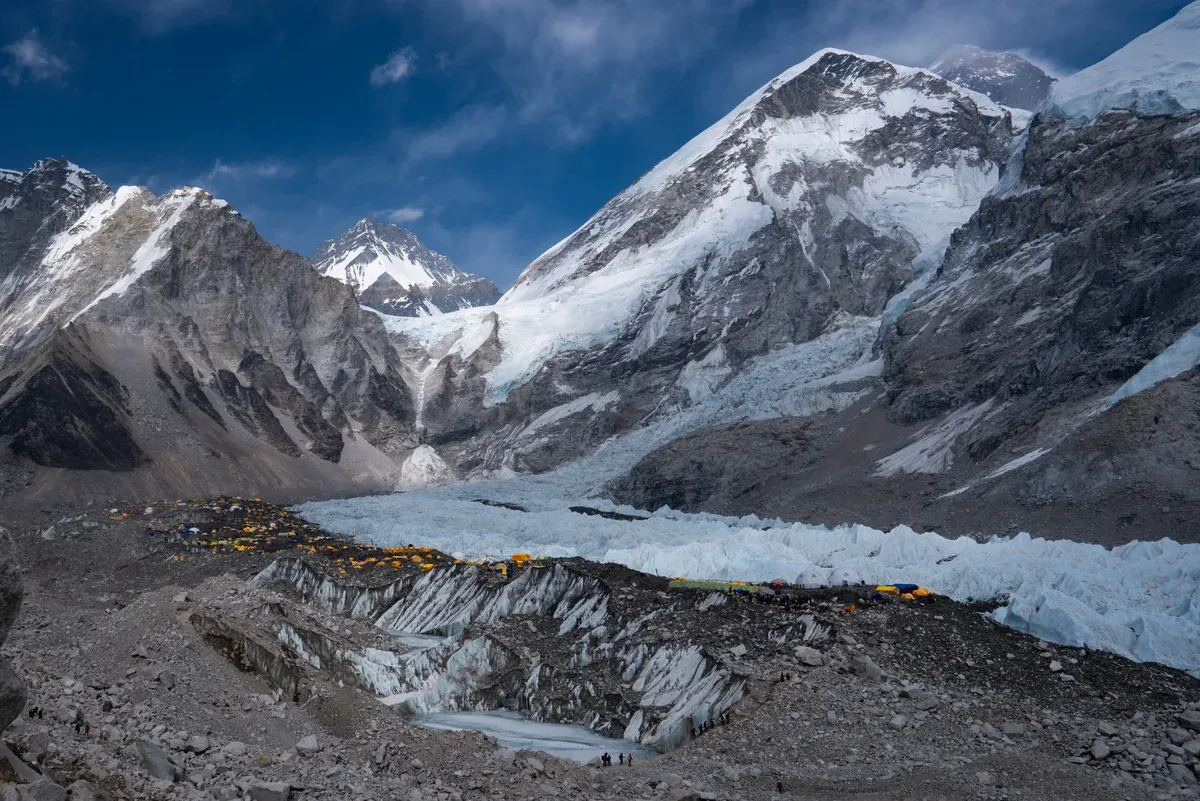
Mount Everest at sunrise above the Khumbu Glacier from the Kala Patthar ridge, the view at the heart of Everest climbing tours
Everest Climbing Tours
Mount Everest stands 8,848.86 m on the Nepal-Tibet border, with the Khumbu valley and its lodges below. Everest climbing tours split by how high you go, how many days you buy for acclimatisation, and what the price leaves out, from Lukla flights to permits and tips.
Quick answerThe price range, the pick and the cheapest view
Everest climbing tours run from a 1-hour scenic flight at $100 to a 60-day guided summit expedition at $42,000 per person, with base camp treks from $955 and trekking-peak climbs from $1,250. What separates them is height, acclimatisation days, and the extras each price leaves out.
Key takeaways
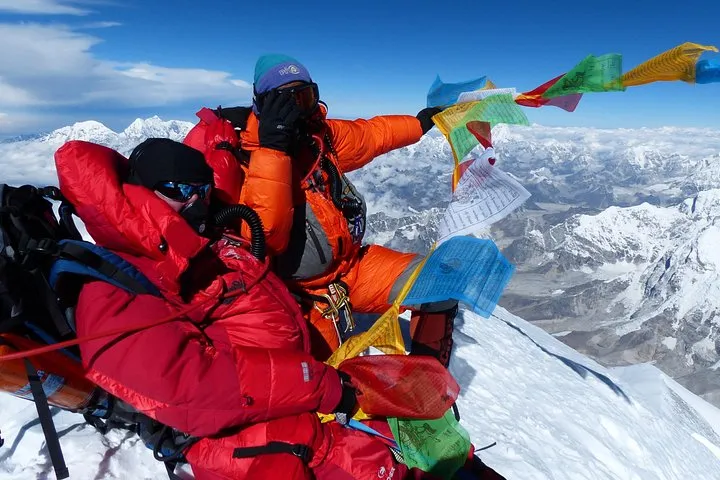
The full summit climb: the Everest Expedition Nepal runs 60 days to 8,848 m with a climbing Sherpa, oxygen and permits, from $42,000, plus a USD 1,800 summit bonus and USD 200 in tips. See the full expedition.
First summits on 6,000 m peaks: Island Peak, Mera Peak and Lobuche East ask for crampons and fixed ropes, with trips from 14 to 30 days and permits in or out of the price → trekking peaks
The pick: the Everest Base Camp Trek 14 Days from Ace the Himalaya, 5.0 from 1,656 reviews, from $1,800 with the Lukla flights → see the card.
Prices are per person and the from-price is the lowest option on each listing. The platform handles payment, and cancellation terms differ: free cancellation to 24 hours before departure on most listings, to 6 full days before on the Everest Base Camp Trek 14 Days and the Tibet tour, and all sales final on the helicopter-return trek. What each price leaves out, from Lukla flights to permits, tips and insurance, is stated on every card.
The full Everest climb from the south side, with a climbing Sherpa for every climber. The listing runs 60 days and includes oxygen, permits and base camp tents.
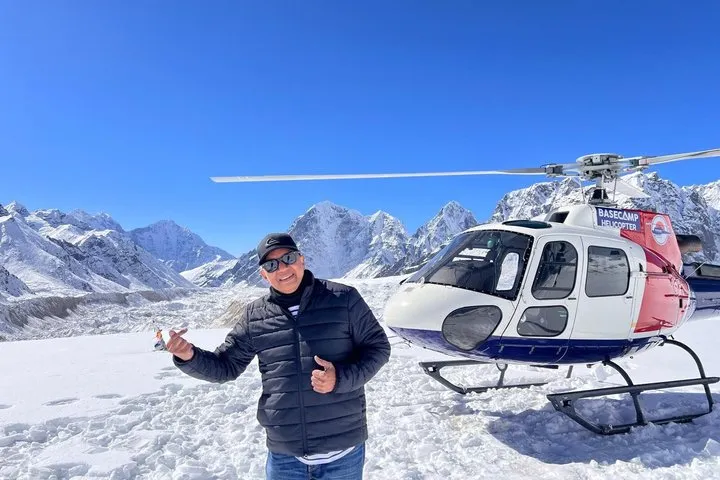
A shared helicopter day from Kathmandu with a landing at Everest Base Camp and Kala Patthar. Hotel pickup is included and breakfast at Everest View Hotel is optional.
Every listing states what the price leaves out, from Lukla flights to summit bonuses
Free cancellation to 24 hours before departure on most listings, 6 days on two
Licensed guides, porters or climbing Sherpas named on every listing
Heights from 3,870 m to the 8,848 m summit, matched to your fitness
Everest Tours by Price, Days and Height
Every Everest climbing tour side by side: the listing price per person, the days, the highest point the listing names and the kind of trip. Where a listing prints no height the cell says so, and the cards carry what each price leaves out.
The Everest Base Camp Trek 14 Days runs through the season with Lukla flights, permits and a licensed guide included. Check live dates and the 6-day cancellation window below.
From $1,800 per person · 14 days · 5.0★ (1,656 reviews)
You'll confirm the exact date and time on the secure booking page.
Climbing Mount Everest: The Full Expedition
One listing on this page climbs Everest itself. Here is what it covers, how the south-side route stacks its camps, and who can sign up. The route and the risk on climbing Mount Everest, the money on the cost to climb Everest.
The Khumbu Icefall from base camp, with the west shoulder of Everest, Lhotse and Nuptse above. Photo: Thaneswar Guragai, CC BY-SA 4.0, via Wikimedia Commons
What the Everest Expedition Includes
The Everest Expedition Nepal from Monterosa Treks and Expedition costs $42,000 per person and runs 60 days from arrival in Kathmandu, with about 45 days on the mountain. Each climber gets a 1 to 1 climbing Sherpa guide, 6 bottles of oxygen with mask and regulator, and the Everest climbing permit with the icefall charge and fixed ropes. The Kathmandu to Lukla flights are included with 50 kg of cargo per climber, the trek to base camp runs by lodge on full board, and above base camp you sleep in tents with high-camp climbing food, gas and stove.
The price leaves out the USD 1,800 guide summit bonus, USD 200 per climber in base camp staff tips, lunch and dinner in Kathmandu, personal climbing gear, insurance and helicopter evacuation. Bookings take up to 15 people per booking, in English, with an age band of 18 to 75.
The South-Side Route, Camp by Camp
The Nepal side climbs from base camp on the Khumbu Glacier through the icefall and a ladder of camps to the South Col, then the summit at 8,848 m. Climbers cross the Khumbu Icefall on rope and ladder networks set by professional guides, most crossings before sunrise, and start using bottled oxygen from the South Col with summit attempts typically leaving before midnight. The heights below come from Alpine Ascents' route description, one of several published sets.
A round trip from the South Col typically takes 9 to 18 hours. Alan Arnette notes the descent has the highest incident rate on the Southeast Ridge route.
Stage
Height
What happens
Base Camp
5,364 m
Trek in from Lukla over about 8 days, tents, dining and shower tent
Khumbu Icefall
5,486 m
Crossed on fixed ropes and ladders, most climbers go before sunrise
Camp I
5,943 m
First camp above the icefall, reached in about 3 to 6 hours
Camp II
6,400 m
About 2 to 3 hours from Camp I, acclimatisation rotations run through here
Camp III / Lhotse Face
7,162 m
About 3 to 6 hours from Camp II on the Lhotse Face
Camp IV / South Col
8,016 m
Oxygen starts here, summit push leaves before midnight
The summit
8,848 m
Final push of 10 to 12 hours round trip from Camp IV
Who Can Sign Up, and When
The summit season is spring. Nepal's royalty for a foreign climber on the Everest Southeast Ridge route is $15,000 in spring, up from $11,000, with autumn at $7,500 and winter and summer at $3,750 per the fee update. On experience, Nepal's Integrated Tourism Bill would require Everest permit applicants to have climbed a mountain over 7,000 m, but it remains a bill in a House of Representatives committee with no law in force.
On results, the Himalayan Database as reported by Alan Arnette lists 851 Everest summits in spring 2025, a 63% member success rate on the Nepal side that season, and running totals through 2025 of 13,737 summits and 339 deaths, a death rate of 1.4% of summits from 2000 to 2025. All but 4 of the 2025 summiteers used supplemental oxygen.
Trekking Peaks: Island Peak, Mera Peak and Lobuche East
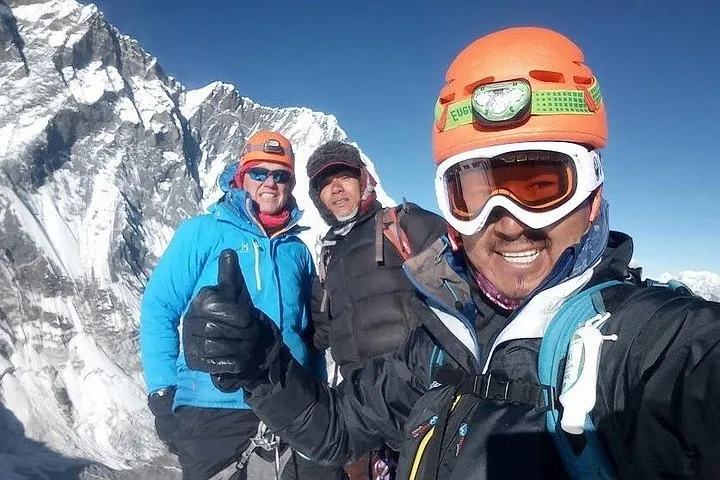
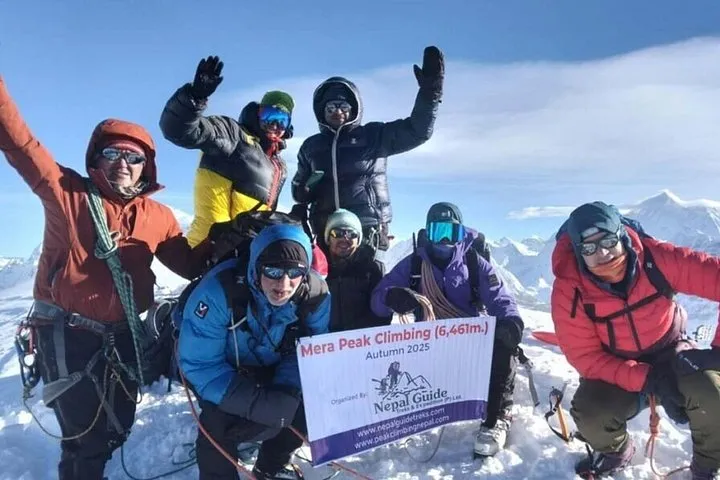
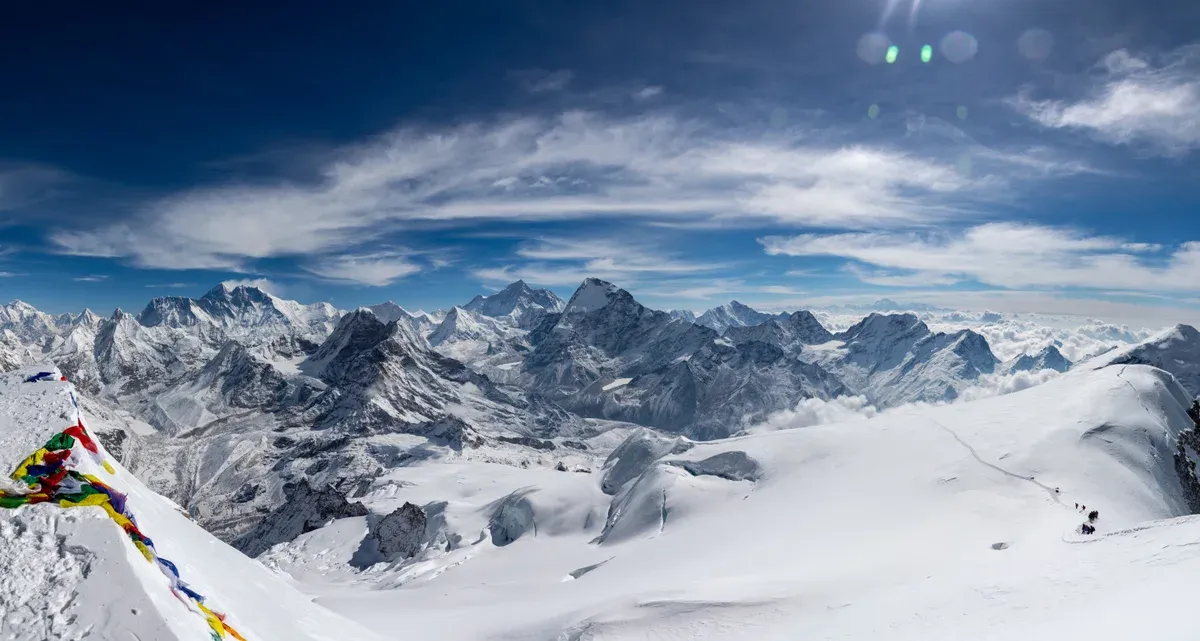
The usual first step before an 8,000 m peak is a Nepal trekking peak, a real summit of 6,000-plus metres on crampons and fixed ropes. The listings here cover Island Peak, Mera Peak and Lobuche East.
The summit of Mera Peak. Photo: Sangyam adventurer, CC BY-SA 4.0, via Wikimedia Commons
The Peak Trips Side by Side
The table compares the trekking-peak listings by price, days, summit height and the costs each one pushes back to you, using the figures in each listing. Each carries free cancellation to 24 hours before departure. The listings print Island Peak at 6,189 m (20,305 ft), though Wikipedia gives 6,165 m (20,226 ft), and Mera Peak's listing prints no height while Wikipedia gives the main Mera North summit at 6,476 m (21,247 ft).
International airfare, visa, insurance, Kathmandu meals, gear, tips
What a Trekking Peak Asks of You
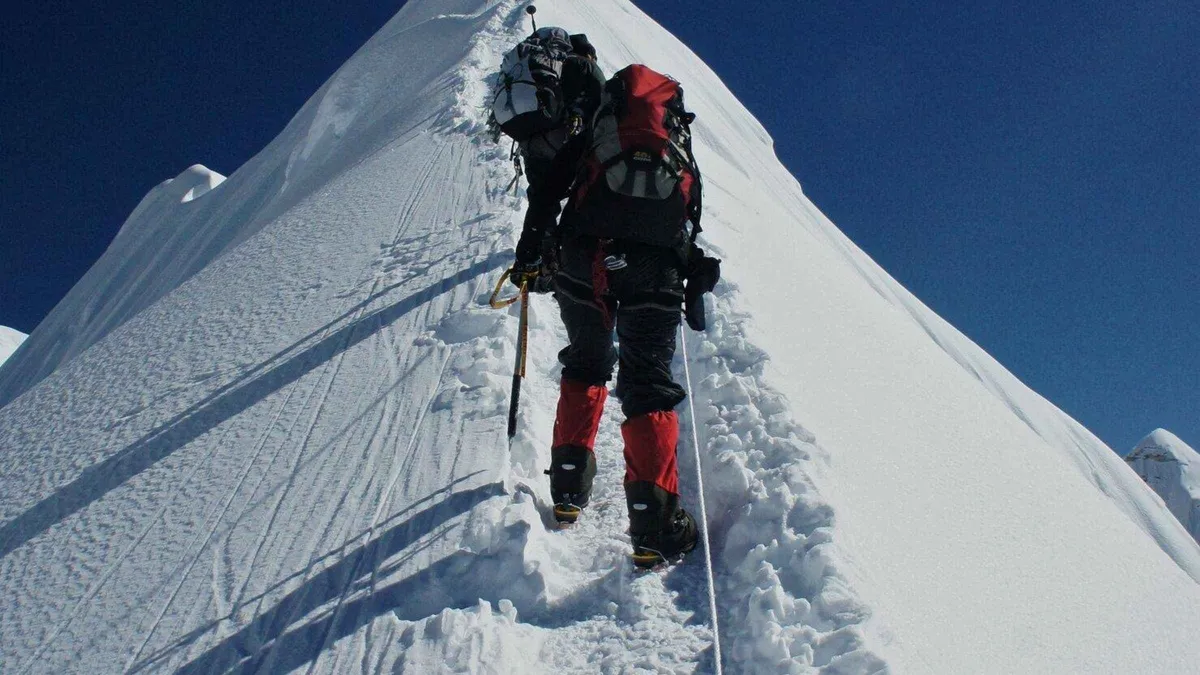
These climbs are graded entry level but they are not walks. Island Peak's easiest route, the North Ridge, is graded PD+, with glacier travel, scrambling and ice climbing, and guides may fix ropes for the nearly 100 m climb to the summit ridge, where a crevasse has sometimes forced teams back and a 5-metre aluminium ladder has been in use. The Nepal royalty for foreign climbers on peaks up to 6,500 m is $350 in spring and $175 in autumn, winter and summer per the fee update, though operator figures differ and one lists Island Peak spring at $500 up from $350, so confirm the permit with the operator.
This is why the peaks are the standard apprenticeship before Everest: the same skills of crampons, jumars on fixed ropes and acclimatisation above 5,000 m carry over, at a fraction of the cost and commitment.
Choosing Between Them
If you want the peak and the base camp trail in one trip, the Island Peak and EBC Climb at $2,899 over 20 days treks to Everest Base Camp and Kala Patthar first, then climbs Island Peak from a tented base camp and high camp at 5,400 m, with permits included. If you only want the peak, Island Peak Climbing at $1,250 over 14 days is the lowest peak price on the page, but read the exclusions: the Lukla flights at USD 500 per person, the Island Peak permit at USD 350 or USD 175, and guide insurance at USD 100 sit outside the price. Mera Peak is the highest of these peaks and its route through the uninhabited Hongu and Hinku valleys is high-altitude glacier walking, technically straightforward for experienced climbers with acclimatisation the main challenge.
The 30-day Three Peaks Climbing Trip at $7,773 links Mera, Island and Lobuche East with permits, internal flights and meals on the trail, and it is a new listing with no reviews yet.
Everest Base Camp Treks
You do not need to climb anything to stand at Everest Base Camp at 5,364 m or on the Kala Patthar viewpoint above it. The trek listings here reach base camp or the Khumbu high points, from 8 to 17 days. The walk itself on the Everest Base Camp trek, the place on Everest Base Camp.
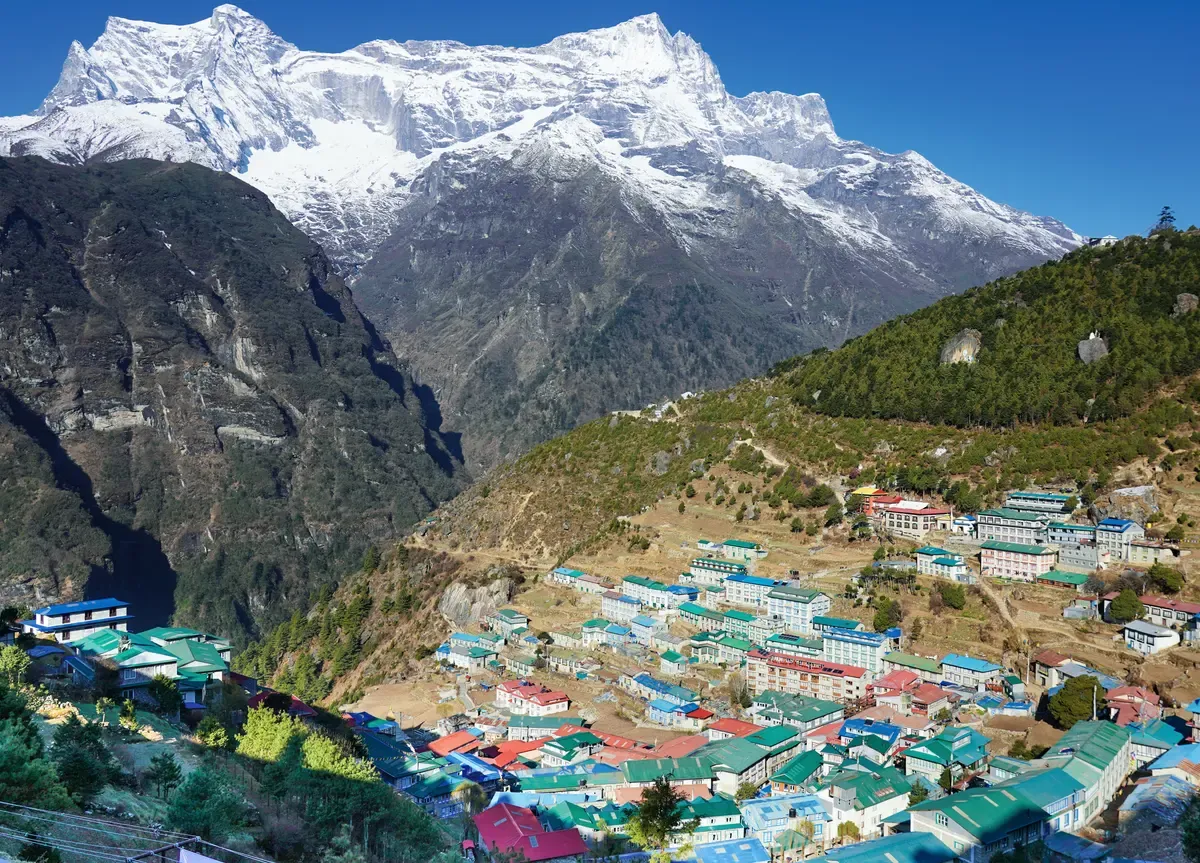
Namche Bazaar facing Kongde Ri. Photo: Nirojsedhai, CC BY-SA 4.0, via Wikimedia Commons
The Base Camp Treks Compared
The table lines up the trek listings by price, days, whether the Lukla flights are inside the price, and the cancellation terms, from each listing. Cancellation runs from free to 6 full days before departure, to free to 24 hours, to all sales final on the helicopter return. Read the cards for the rest of the inclusions, because meals on the trail are not in every price.
Every base camp trek starts with the flight to Lukla at 2,846 m (9,337 ft) by one source and 2,860 m by another, then the trail climbs to Namche Bazaar at 3,440 m (11,290 ft), where standard itineraries put an acclimatisation rest day. From there the route goes to Tengboche Monastery at 3,867 m (12,687 ft), then Dingboche, listed at 4,410 m (14,470 ft) in its own article and 4,260 m in the base camp article, for a second rest day, then Lobuche at 4,940 m (16,210 ft) and Gorak Shep at 5,164 m (16,942 ft), the last village with accommodation. Camping is not allowed at base camp on trekking permits, so most trekkers sleep at Gorak Shep and walk the 1.5 to 2.5 hours to Everest Base Camp at 5,364 m (17,598 ft) from there.
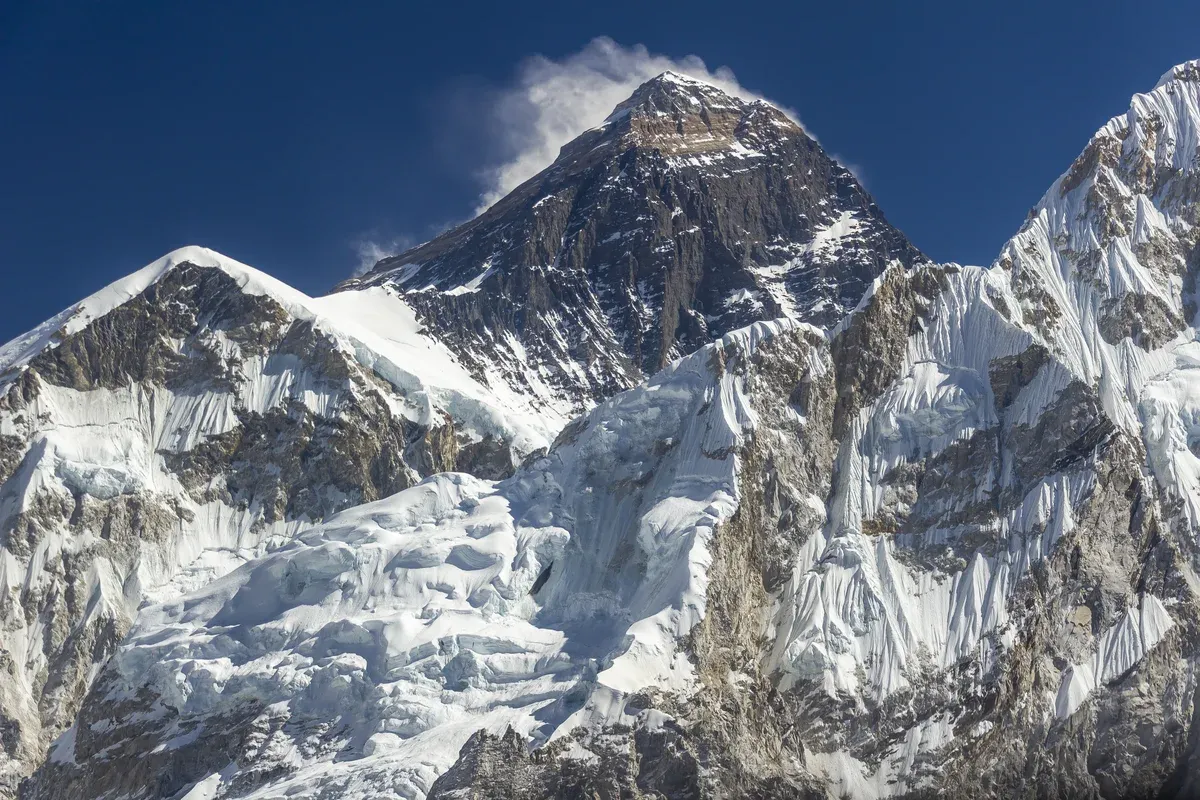
Kala Patthar, commonly listed at 5,545 to 5,550 m (18,192 to 18,209 ft), is climbed from Gorak Shep in about 1.5 to 2 hours and gives the close-up view of Everest that base camp itself does not.
Most trekkers spend 12 to 18 days round trip from Lukla including acclimatisation, and skipping the rest days raises altitude sickness risk sharply
A helicopter return from the region can cut three or four days off the trek
Variations, Fees and the Guide Rule
A few treks change the formula. The Everest Three Passes Trek is a 17-day private circuit over Renjo La, Cho La and Kongma La with Gokyo Lakes added, advised for spring or autumn because heavy winter snow can block the passes, and it is a new listing with no reviews yet. The EBC Trek with Helicopter Return at $2,250 flies you back from Gorakshep to Lukla by helicopter, and all sales are final with no refund for cancellation.
The Everest Panorama Trek turns back at Tengboche at 3,870 m (12,694 ft) in 8 days for anyone short on days, and the listing calls it easy compared with the base camp trek. On fees, the Sagarmatha National Park entry permit is NPR 3,000 for foreigners and the Khumbu Pasang Lhamu Rural Municipality fee is listed at NPR 2,000 per foreigner by one source and NPR 3,000 by another, so carry cash for both. On guides, a national rule from April 1, 2023 requires foreign trekkers in TIMS-covered areas to hire a licensed guide, but the Solukhumbu region has rejected the ruling and says guides are not mandatory there, and every trek on this page includes one anyway.
Everest Without the Trek: Helicopter, Flight and Tibet
Not every Everest trip needs boots on the trail. A helicopter day, a mountain flight or a Tibet road tour each put the mountain in front of you in hours or days.
Everest from Kala Patthar. Photo: Bijay Chaurasia, CC BY-SA 4.0, via Wikimedia Commons
The No-Trek Tours at a Glance
The tours that reach Everest without a trek, compared on the catalog price per person, the time the trip takes, where it lands or turns and where it starts. Every figure comes from the listing.
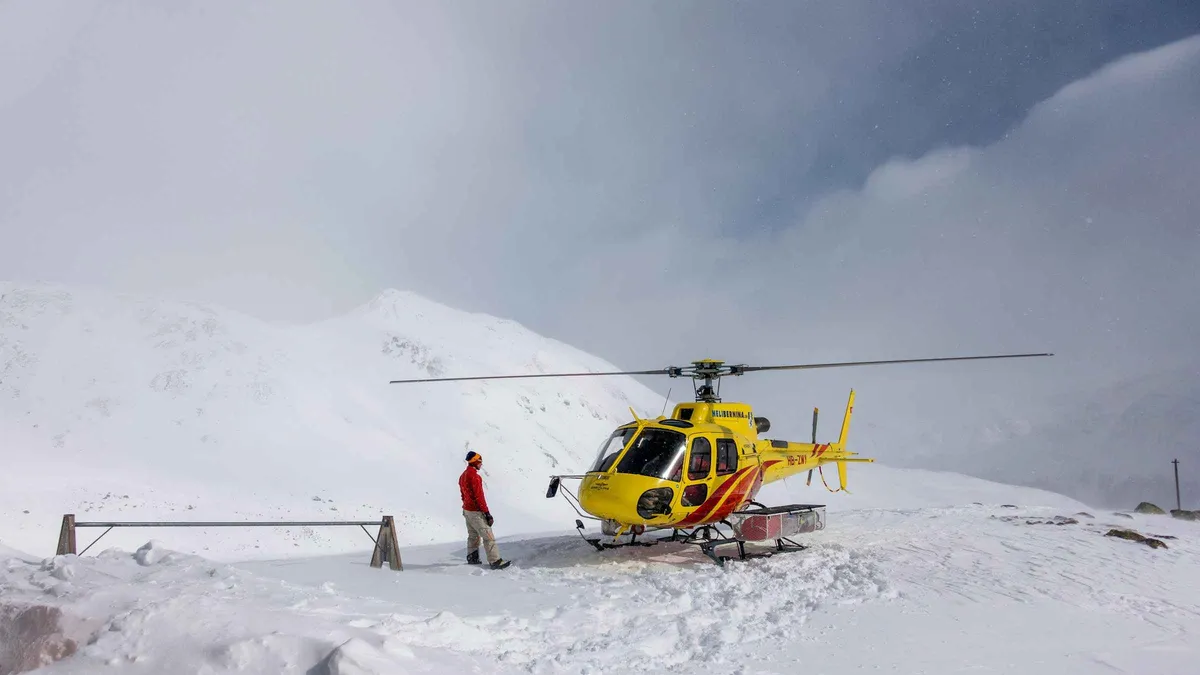
Both helicopter tours fly from Kathmandu, refuel at Lukla and land at Kala Patthar or Everest Base Camp only when the weather allows. The Everest Base Camp Helicopter Landing runs 5 to 6 hours in a shared Airbus H125 with 5 passengers and 1 pilot. Hotel pickup is around 5:30 AM and the flight leaves at 6:30 AM.
Ground time at the landing is short: the itinerary lists 10 minutes for the stop, because of the altitude. Passengers over 100 kg should message the operator after booking. The listing adds $50 per person in extra charges ($1,650 in total) for national park fees, municipal tax and airport tax, which it excludes without itemising.
Breakfast at the Everest View Hotel is optional. If weather cancels the flight you get a full refund. The Everest View Hotel Helicopter Breakfast is a private 6-hour trip at $1,352, with oxygen on board, a window seat for every passenger and breakfast at Everest View Hotel (3,880 m).
It is a new listing with no reviews yet. Government taxes and extra costs from weather delays are not included.
The Mountain Flight and the Tibet North Side
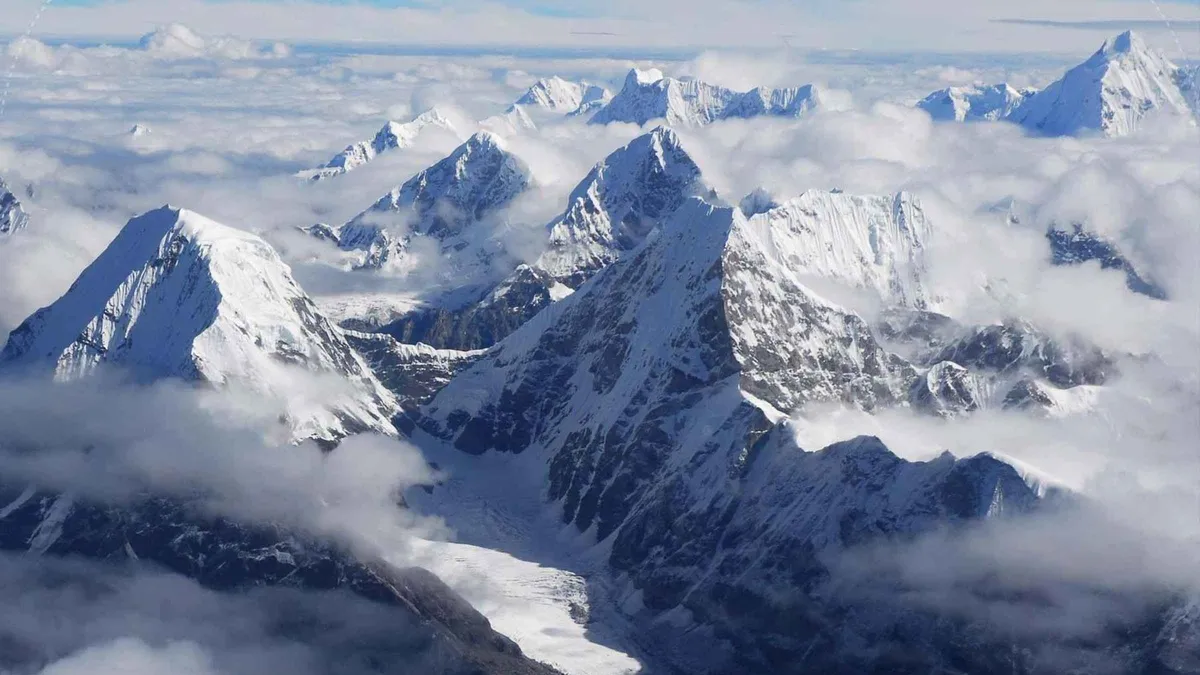
The cheapest way to see Everest is the Everest Scenic Flight at $100. The trip takes 2 hours built around a 1-hour flight from Tribhuvan International Airport past Mount Everest (8,848 m), with Lhotse, Makalu and Nuptse in view. Every passenger gets a window seat and the listing includes an adventure certificate and a packed breakfast or lunch.
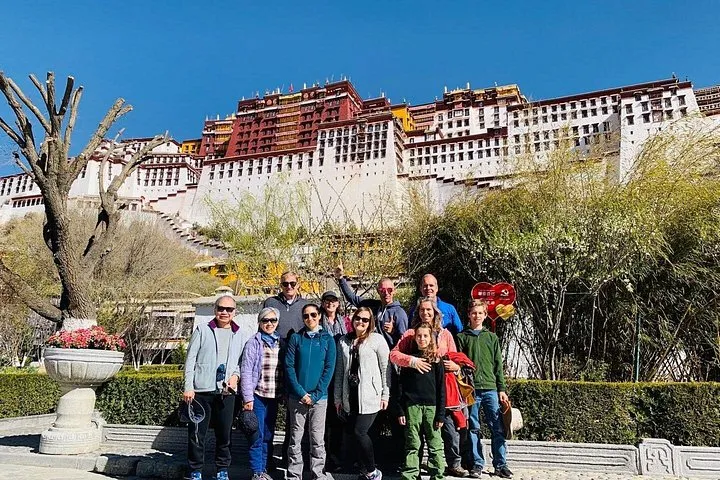
Bad weather means a free rebooking. On the other side of the border, the Tibet Everest Base Camp Tour is an 8-day minibus tour from Lhasa via Gyantse and Shigatse to the north base camp at 5,200 m, with a night in a tent guest house at Rongpuk. The Tibet Travel Permit and entrance tickets are included.
The Chinese L visa and the flight or train to Lhasa are not. Book at least 10 working days ahead for the permit and send passport and visa copies at least 20 days before travel. The price is based on double occupancy.
Three films before you book: the trek to Everest Base Camp, a climb of Island Peak, and a helicopter landing at Kala Patthar.
Mount Everest Base Camp Trek- Full Documentary
The trail from Lukla to base camp, day by day.
Video: Counting Countries
6,165M up in the Himalaya - Island Peak Climb
A climb of Island Peak, the usual first trekking peak.
Video: Cam Bostock
Everest Helicopter Tour in Nepal | EBC | Kalapathar | Flight landing tour
The helicopter route from Kathmandu to a Kala Patthar landing.
Video: Ram Sharan Upreti
Third-party videos, embedded from YouTube. This site did not shoot them and has no relationship with the creators.
What an Everest Climbing Tour Costs
The gap between a $100 flight and a $42,000 expedition is the height, the days and the logistics. Here is what the permits cost and what each catalog price leaves out.
Permits and Fees
The permits and fees around an Everest trip, compared on the amount and on who pays it. The figures come from the sources named under this section, and where two sources disagree both are given.
Fee or cost
Amount
Who pays it
Everest royalty, normal route, spring
$15,000 per foreign climber, up from $11,000
The expedition, usually passed to the client
Everest royalty, normal route, autumn
$7,500, up from $5,500
The expedition
Everest royalty, normal route, winter and summer
$3,750, up from $2,750
The expedition
Everest royalty, other routes, spring
$10,000
The expedition
Trekking peak permit, up to 6,500 m
$350 spring and $175 autumn, winter and summer (one source says $375 spring, another $250)
The climbing tour or the client, depending on the package
Sagarmatha National Park entry
NPR 3,000 for foreigners
Every trekker, at Monjo or Kathmandu
Khumbu Pasang Lhamu municipality fee
NPR 2,000, with one source reporting NPR 3,000 since 2026
Every trekker, paid near Lukla
Nepal visa on arrival
$30 for 15 days, $50 for 30 days, $125 for 90 days
Every visitor at the airport
Lukla flight where the tour prices it
USD 500 per person round trip on Island Peak Climbing, $215 each way or $150 one way per other sources
The trekker, if not in the package
Read the Catalog Price Carefully
The lower the price, the more it usually leaves out. Island Peak Climbing at $1,250 lists the Lukla flights (USD 500 per person) and the Island Peak climbing permit (USD 350, or USD 175 as written) as not included, plus guide insurance and tips. The Everest Panorama Trek at $1,225 has the Kathmandu to Lukla flight in its itinerary but not in its inclusions list, and only dinner and breakfast are listed as included. The Tibet Everest Base Camp Tour at $969 leaves out the Chinese L visa and the flight or train to Lhasa.
At the top, the Everest expedition at $42,000 excludes a USD 1,800 guide summit bonus, USD 200 per climber in base camp staff tips, lunch and dinner in Kathmandu, personal gear, insurance and helicopter evacuation. Check each card before you book.
The Market Range for a Summit
For context only, these are third-party market figures, not prices you can book here. Alan Arnette's 2026 edition says most people pay between $40,000 and $80,000 to climb Everest and some pay up to $300,000. His cost page lists a 2026 median of $45,250 for a Nepalese guide service on the Nepal side, $54,000 for an international operator with a Sherpa guide and $76,000 with an international guide.
On the Tibet side the medians are $47,000 and $90,800. Sherpa-supported climbs run $30,000 to $55,000 and fully guided climbs $65,000 to over $125,000, all per Arnette. Tibet Travel's FAQ puts an Everest climb at around $40,000 or more.
Against that market, the guided Everest expedition on this site at $42,000 for 60 days sits below the $45,250 median for a Nepalese guide service, with the summit bonus and tips still to budget.
The trail from Lukla climbs through Sherpa villages and monasteries before the high ground. These are the six points most itineraries build their days around. More on Namche Bazaar, Tengboche Monastery and Kala Patthar.
2,846-2,860 m
Lukla
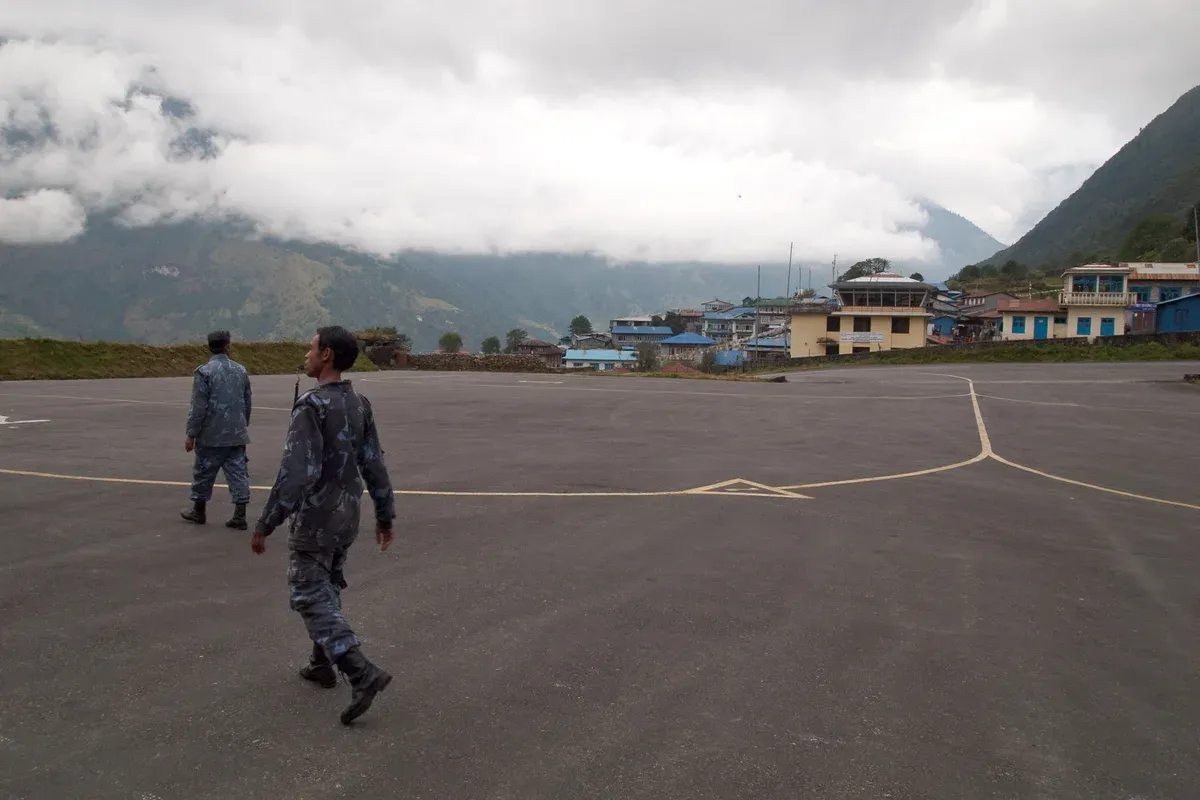
Most Everest trips start at Tenzing-Hillary Airport in Lukla, a 527 m runway with an 11.7% gradient on a mountainside. The Kathmandu flight takes about 35 minutes. The Everest Base Camp Trek 14 Days begins with this flight.
3,440 m
Namche Bazaar
Namche Bazaar is the Sherpa capital and the first acclimatization stop, usually reached after about two days from Lukla. Most treks hold a rest day here. See how the days stack up on the Everest Base Camp Trek Lodge to Lodge.
3,867 m
Tengboche Monastery
Tengboche Monastery is the largest gompa in the Khumbu region and sits on a ridge with Everest views. The short Everest Panorama Trek turns back here at 3,870 m on its 8-day route.
4,260-4,410 m
Dingboche
Dingboche is the second acclimatization village, with no roads and a helipad. Standard itineraries take a rest day here before the climb to the high ground. Climbers pass it twice on the Island Peak and EBC Climb.
5,164 m
Gorak Shep and Kala Patthar
Gorak Shep is the last village with accommodation on the trek, and the climb to Kala Patthar above it takes 1.5 to 2 hours. Kala Patthar gives the closest accessible view of Everest and Nuptse. The Everest Base Camp 12 Days tops out here at 5,545 m.
5,364 m
Everest Base Camp
Everest Base Camp on the Nepal side sits on the Khumbu Glacier at 5,364 m (17,598 ft), and camping here is not allowed on trekking permits, so most trekkers walk in from Gorak Shep. Expeditions live here for weeks, as on the Everest Expedition Nepal.
Photos via Wikimedia Commons: Lukla Airport, Vyacheslav Argenberg, CC BY 4.0. Namche Bazaar, Nirojsedhai, CC BY-SA 4.0. Tengboche Monastery, Vyacheslav Argenberg, CC BY 4.0. Dingboche, Nirojsedhai, CC BY-SA 4.0. Everest from Kala Patthar, Bijay Chaurasia, CC BY-SA 4.0. Everest Base Camp, Nirojsedhai, CC BY-SA 4.0.
Seasons, Weather and Altitude
Two windows carry almost all Everest traffic. The weather decides whether your Lukla flight goes and whether a summit push or a helicopter landing happens at all. Delays and the Ramechhap diversion on Lukla airport.
Tenzing-Hillary Airport in Lukla. Photo: Vyacheslav Argenberg, CC BY 4.0, via Wikimedia Commons
When to Go
Spring and autumn are the two seasons, and each has a different character. Summit traffic on Everest itself is overwhelmingly spring, with about 80% of the 2026 summits falling between mid and late May.
Months
Season
Trail
Best for
March to May
Spring
Climbing season, warm days, cold nights at base camp around -17C in March rising to -8C in May
Everest summit pushes, trekking peaks, all treks
June to August
Monsoon
Most of Nepal's annual rain, visibility closes Lukla about 50% of the time and cancellation rates exceed 60%
Not recommended, trails wet and flights unreliable
September to November
Autumn
Clear skies after the monsoon, nights at base camp -9C in October and -12C in November, rooms fill fast in October and November
Treks, trekking peaks, best Lukla reliability
December to February
Winter
Off-season, base camp nights down to -25C, high passes can be blocked by heavy snow
Short treks only, quiet trails
Lukla Flights and the Ramechhap Diversion
Lukla's runway is 527 m long and strong southwest winds usually close it from mid to late morning, so flights run early. In peak spring and autumn all flights often operate from Manthali airport in Ramechhap instead of Kathmandu, which adds a 4 to 5 hour drive and a departure from your hotel around 2 or 3 AM. October is the most reliable month, with about 1 in 10 departures delayed more than 2 hours.
The Everest Base Camp Trek Lodge to Lodge already routes its Lukla flights via Ramechhap with transfers included. Build a spare day into your plan either way, because a grounded flight can cost you the connection at the start or the end.
Altitude and Insurance
Altitude sickness typically occurs above 2,500 m and symptoms often appear within ten hours of ascent. The common rule of thumb is to sleep no more than 300 to 500 m higher each day above 3,000 m and to climb high and sleep low, which is why good itineraries hold rest days at Namche Bazaar and Dingboche. Watch for headache, nausea, fatigue, dizziness and poor sleep, and never go higher with worsening symptoms.
No national law requires travel insurance, but agencies usually ask for proof and it is strongly recommended above 3,500 m. Take a policy with helicopter evacuation cover, advised at a minimum $100,000 limit and $200,000 to $500,000 for high-altitude trips, because evacuation from above 5,000 m costs $6,000 to $10,000 or more. The Everest Three Passes Trek over passes between 5,367 m and 5,540 m is the altitude test on this page, and its listing advises spring or autumn because winter snow blocks the passes.
Do buy insurance that covers helicopter evacuation at altitude, because a rescue from a trekking peak above 6,000 m can cost $10,000 to $15,000+ and listings such as the Everest Expedition Nepal exclude emergency evacuation by helicopter.
Do keep a spare day for Lukla flights, because visibility closes the airport about half the time in monsoon and peak-season flights can be rerouted to Ramechhap with a 4 to 6 hour drive.
Do read what the price leaves out before you book, because the $1,250 Island Peak Climbing trip excludes the Lukla flights (USD 500) and the Island Peak permit, and the $42,000 Everest expedition excludes a USD 1,800 guide summit bonus and USD 200 in base camp staff tips.
Do train before a trekking peak, because listings for Island Peak and Mera Peak ask for good to high physical fitness and summit days run 8 to 12 hours with crampons and fixed ropes.
Do climb high and sleep low, because guides advise limiting sleeping-altitude gain to about 300 to 500 m per day above 3,000 m and the acclimatisation days at Namche Bazaar and Dingboche are built into the treks for that reason.
Don't
Don't skip the acclimatisation days, because rushing to Everest Base Camp in 9 to 10 days greatly increases the risk of altitude sickness at 5,364 m.
Don't book the summit expedition without a 6,000 m or 7,000 m peak behind you, because a bill in Nepal would require Everest applicants to have climbed a peak over 7,000 m, and the 60-day climb at 8,848 m is not a first mountain.
Don't count on a refund on the EBC Trek with Helicopter Return, because that listing is all sales final with no refund for cancellations.
Don't fly in to altitude and go straight up, because altitude sickness typically occurs above 2,500 m and symptoms can appear within ten hours of ascent, so build rest days in before pushing to Kala Patthar at 5,545 m.
Is an Everest Climbing Tour Worth It
A booking buys logistics and days. It cannot buy weather, and it does not always buy the whole bill.
What we genuinely like
+The choice of height and days runs from a 2-hour scenic flight at $100 to a 60-day summit expedition at $42,000.
+Guides, porters, permits and accommodation are arranged for you, which removes the hardest paperwork in Nepal.
+The Lukla flights are in the price on most treks, including the 14-day base camp trek and the 12-day option.
+Free cancellation to 24 hours before applies to most listings, and the pick allows it to 6 days before.
The honest downsides
−The weather holds the Lukla flights, and monsoon visibility cancels about half of them.
−Altitude does not care about fitness, and even fit trekkers can be turned around at Kala Patthar or a high camp.
−The cheapest listings leave flights and permits out, so the sticker price is not the whole cost.
−Three listings are new with no reviews yet, so the rating cannot tell you anything about them.
−The summit expedition costs $42,000 before the USD 1,800 guide summit bonus and USD 200 in staff tips.
Who it's NOT for: Not for anyone who wants a guaranteed summit, a guaranteed landing or a trip with no days at altitude.
Which Everest Tour Fits You
If You want the summit of Everest itself at 8,848 m and about 45 days on the mountain
The trek to Everest base camp was amazing. My guide was very helpful, informative and kind. Communication from the company was prompt the entire time.
Bradley · United States · May 2026 · GetYourGuide verified booking
★★★★★★★★★★
I absolutely loved this trek! Every day had a new challenge and new sights to see. What made our trek the best however was our fantastic guide Mohan! Anyone thinking of booking with this company ask for him because he was incredible. He was attentive and caring and was completely at our pace in every step of the way.
Zoya · Canada · January 2025 · GetYourGuide verified booking
★★★★★★★★★★
It was an amazing experience, the Sherpas and porters were extremely friendly and professional and ensured we were safe and had an amazing time. Would definitely go back and do it again !
Sam · Australia · August 2025 · GetYourGuide verified booking
★★★★★★★★★★
The pick up was punctual. Check in smooth. The flight was around 50 minutes. The main peaks was pointed by airlines staff, which was so nice. After the flight , the driver took me to my hotel where I was around 8:00 AM. Whole trip including pick up and drop off was around 3 hours.
Roza · Poland · March 2026 · GetYourGuide verified booking
Everest Climbing Tours: Your Questions
How much does it cost to climb Mount Everest?
The only bookable summit climb here is Everest Expedition Nepal at $42,000 per person for 60 days, and it excludes a USD 1,800 guide summit bonus, USD 200 in base camp staff tips and insurance. For a cheaper high-altitude climb, Island Peak Climbing puts you on a 6,189 m summit from $1,250.
Can a beginner climb Everest?
No listing is aimed at a first mountaineer on Everest, and a bill in Nepal would require Everest permit applicants to have climbed a peak over 7,000 m. A beginner should start on a 6,000 m trekking peak such as Island Peak Climbing or Island Peak and EBC Climb, or trek to base camp on the Everest Base Camp Trek 14 Days.
How long does it take to climb Mount Everest?
The bookable Everest Expedition Nepal runs 60 days with about 45 of them on the mountain. Market guides cited in the cost section put a standard expedition at six to eight weeks, and the itinerary includes the trek to base camp before the rotations start.
Is Everest open for climbing, and when is the season?
Yes, and summit climbs run in spring, with about 80% of the 2026 Nepal-side summits between May 17 and May 26, while treks run in spring and autumn, as covered in the seasons section. Most spring summits land in a narrow window, so the weather decides the summit push on Everest Expedition Nepal just as it decides Lukla flights.
The Everest Base Camp Trek 14 Days from Ace the Himalaya is the pick: $1,800 per person with Lukla flights and permits included, a 5.0 rating from 1,656 reviews and free cancellation to 6 days before.
 Everest Climbing Tours