 Everest Climbing Tours
Mera Peak Climbing
Mera peak climbing is the highest of Nepal's permitted trekking peaks, and this listing from Nepal Guide Treks and Expedition runs about 18 days from Kathmandu for $3,000 per person. The route crosses the wild Hinku and Hongu valleys instead of the busy Everest Base Camp trail, and the climbing finishes on a summit above 6,000 m. Climbing permits, climbing gear, food during the trek and 4 nights in Kathmandu are in the price. International flights, personal gear and tips are not. This page sets out what the price covers, what you pay on top, who the trip rules out and how it compares with other Everest climbing tours, so you can check Mount Everest climbing tours before you book.
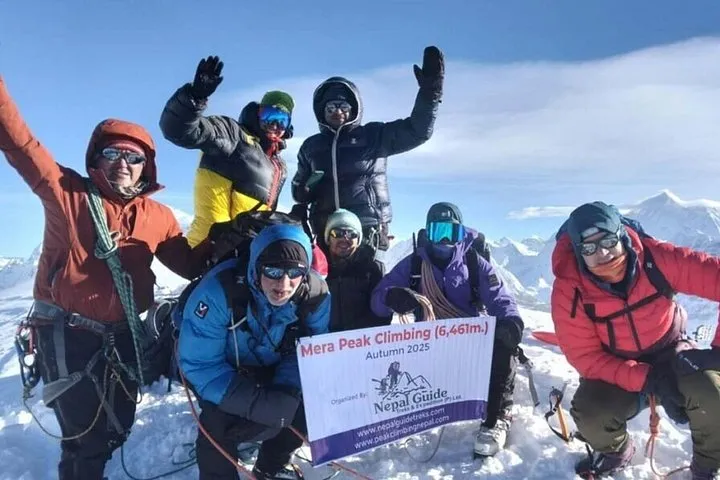
About This Tour
Nepal Guide Treks and Expedition runs this trip and sells it on Viator with a 5.0 rating from 36 reviews. The route climbs Mera Peak through the uninhabited Hongu and Hinku valleys, south of Everest, with views the listing names as Everest, Cho Oyu, Makalu, Kanchenjunga and Lhotse. Accommodation is a mix of tea houses and camping during the trek, plus 4 nights on bed and breakfast in Kathmandu.
The listing gives no summit height, so treat the figure carefully: the main Mera summit is commonly given as 6,476 m, while other sources give 6,470 m or 6,461 m. Weather and acclimatisation decide the climb, and no summit is guaranteed.
$3,000 per person, which covers the guide, climbing permits for Mera Peak, all necessary climbing gear, trek food and accommodation, and 4 nights in Kathmandu on bed and breakfast
About 18 days
Starts and ends in Kathmandu, meeting at the start point or at the Aryatara Kathmandu Hotel if you arrive by land
Mera Peak summit, height not stated in the listing. Published figures conflict, with 6,476 m for Mera North against 6,470 m and 6,461 m elsewhere
International airfares and departure tax, personal climbing gear, personal expenses and tips to guides and porters. Flights within Nepal are not stated as included
Free cancellation up to 24 hours before departure for a full refund, after that no refund
Check Dates and Availability
Departure times are not fixed in the listing, so check availability to see starting times. Bookings run from 1 to 15 travellers.
You'll confirm the exact date and time on the secure booking page.
Quick answer Mera Peak climb in brief
This Mera peak climbing trip costs $3,000 per person, lasts about 18 days and starts and ends in Kathmandu with up to 15 travellers per booking. Climbing permits, climbing gear, trek food and 4 Kathmandu nights are included. International flights, personal gear and tips are extra.
Key takeaways
- Check what the price leaves out in what the price actually covers
- See the walking stages and camps in the route day by day
- If this peak is not the right fit, compare Island Peak climbing or the peaks trip
What the Price Actually Covers
The $3,000 price covers the guide, permit and gear, but several real costs sit outside it.
Included in the $3,000
The listing includes tea house and camping food and accommodation during the trek, all necessary climbing gear, an experienced trekking and climbing guide, 4 nights in Kathmandu on a bed and breakfast plan, and climbing permits for Mera Peak. That permit line matters, because peak fees for Nepali peaks under 6,500 m are quoted by operators at anywhere from $175 to $500 per person depending on season and source, so a package that carries it saves real admin. Meals in Kathmandu beyond breakfast are not listed, and no domestic flights are named as included.
- Tea house and camping food and accommodation during the trek
- All necessary climbing gear
- Experienced trekking and climbing guide
- 4 nights in Kathmandu on bed and breakfast
- Climbing permits for Mera Peak
Not Included
The exclusion list is short and clear: international airfares and the Nepal departure tax, personal climbing gear, personal expenses, and tips to guides and porters. No mandatory extras are stated. Note the gear split carefully, the operator supplies the technical climbing equipment while you bring your own personal climbing gear.
Travel insurance is not mentioned either way, but helicopter evacuation from trekking peaks above 6,000 m is quoted at $10,000 to $15,000 or more by insurance guides, so buy a policy that covers Mera's altitude before you fly in. There is no stated summit bonus for this operator, unlike the $1,800 guide bonus excluded from the full Everest expedition.
- International airfares and departure tax
- Personal climbing gear
- Personal expenses
- Tips to guides and porters
- Travel insurance and helicopter evacuation, not mentioned in the listing
What You Budget on Top
The honest gap here is flights. The listing states no domestic flights as included, and outside sources quote Kathmandu to Lukla fares of $150 to $215 one way if your trip starts with that flight. Confirm with the operator whether flights to the trailhead are arranged and billed separately before you book.
Add cash for Kathmandu lunches and dinners, a Nepal tourist visa at $30 for 15 days or $50 for 30 days on arrival, and tips.
| Line | In the price | Notes |
|---|---|---|
| Climbing permits for Mera Peak | Yes | Under 6,500 m, quoted at $350 spring or $175 autumn by some sources, $500 or $400 by others, confirm the season rate with the operator |
| Trek food and accommodation | Yes | Tea house and camping combined during the trek |
| Kathmandu hotel | Yes | 4 nights, bed and breakfast only |
| Climbing gear | Group gear yes | Personal climbing gear is excluded |
| Domestic flights | Not stated | Confirm with the operator, Lukla fares are quoted at $150 to $215 one way by outside sources |
| International flights and departure tax | No | Book your own |
| Tips | No | Guides and porters |
| Insurance | Not stated | Helicopter evacuation from peaks above 6,000 m quoted at $10,000 to $15,000 or more |
Sources: Wikipedia, Mount Everest, Wikipedia, Sagarmatha National Park
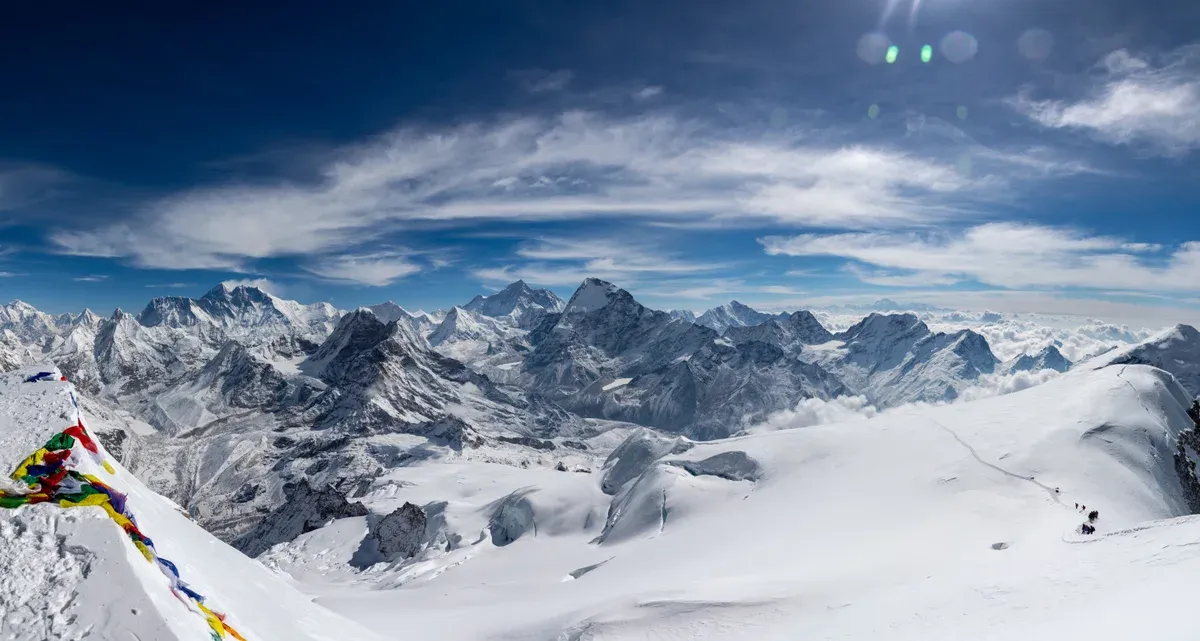
The summit of Mera Peak. Photo: Sangyam adventurer, CC BY-SA 4.0, via Wikimedia Commons
The Route Day by Day
The listing gives a total of about 18 days but prints no numbered day plan, so the stages below follow the operator's own description of the Hinku and Hongu valleys and the climb.
How the Trip Runs
You meet the operator in Kathmandu, where the trip includes 4 nights on bed and breakfast. From there the route crosses the wild, uninhabited Hongu and Hinku valleys, a quieter approach than the Everest Base Camp trail, with tea houses and camping combined. The listing describes the culture of the highland Sherpa communities along the way.
Acclimatisation is the main challenge, because the summit stands above 6,000 m and the valleys give few villages to sleep in. The listing does not state how many acclimatisation or spare weather days are built in, so ask the operator before booking. Weather decides the summit day, and no summit is guaranteed.
The trip returns to Kathmandu at the end of the roughly 18 days.
| Phase | Stage | Height |
|---|---|---|
| Arrival | Kathmandu, trip start point | Not stated |
| Trek in | Hinku valley approach | Not stated |
| Trek in | Hongu valley, uninhabited terrain | Not stated |
| Acclimatisation | Acclimatisation days, count not stated | Not stated |
| Summit day | Climb to the Mera Peak summit | Around 6,476 m per Wikipedia, other sources give 6,470 m or 6,461 m |
| Return | Back to Kathmandu | Not stated |
The Views the Listing Names
The listing names five peaks over 8,000 m: Everest at 8,848 m, Cho Oyu at 8,201 m, Makalu at 8,485 m, Kanchenjunga at 8,586 m and Lhotse at 8,516 m. These are conditions-dependent views, not promises, and cloud or weather can close them. If you want fixed high points on a graded itinerary instead, the Island Peak and EBC Climb listing prints Everest Base Camp at 5,364 m and Island Peak at 6,189 m.
Climbing MERA PEAK - 6476m (A Full Documentary Film)
A full climb of Mera Peak from the Hinku valley. Third-party video by Khakees. This site did not shoot it and has no relationship with the creator.
Who This Trip Rules Out
This is a serious high-altitude trip with stated limits. Check each one before you commit money.
Fitness, Age and Health
The listing requires a high level of physical fitness and is not recommended for travellers with poor cardiovascular health. The booking age band runs from 18 to 70, and an adult must hold the booking. There is no technical experience requirement stated, and the operator supplies all necessary climbing gear, which suits a fit first-time trekking-peak climber.
If you want a shorter, cheaper first summit, Island Peak Climbing runs 14 days from $1,250 per person with a spare weather day, though its flights and some permits are not in that price.
Group Size, Dates and Money
The trip takes up to 15 travellers per booking, runs from a single traveller upward, and sells for $3,000 per person. The listing states no domestic flights as included, so the true trip cost is higher once you reach the trailhead. Cancellation is free only up to 24 hours before departure, after that the money is gone.
If you would rather climb Mera with two other peaks and internal flights covered, the Three Peaks Climbing Trip runs 30 days at $7,773 per person but is a new listing with no reviews yet, so read its page carefully. For the biggest objective of all, the full Everest expedition runs 60 days from $42,000.
Altitude and Weather
The summit sits above 6,000 m, in the band where insurance guides quote helicopter evacuation at $10,000 to $15,000 or more. The listing prints no weather contingency plan and no spare days, so ask directly how the operator handles a storm window before paying. Weather and altitude decide the summit, and neither this site nor the listing can promise one.
Altitude, Season and Paperwork
The practical side of any Mera climb: when to go, how to acclimatise, and what permits and insurance the mountain demands.
Season
The Everest region has two working seasons, spring from March to May and autumn from September to November. Monsoon runs June to August with most of Nepal's rain, and December to February is the off-season when high passes are closed. Night temperatures at comparable Everest-region altitude drop to about -17C in March and -12C in November at 5,364 m on one operator's figures, and Mera is higher, so pack for deep cold either season.
Acclimatisation and Altitude Sickness
Symptoms of acute mountain sickness are headache, nausea, fatigue, dizziness and poor sleep, and they typically appear above 2,500 m, often within ten hours of ascent. The standard advice is to limit sleeping-altitude gain to about 300 m per day above 3,000 m and to climb high and sleep low, with roughly one acclimatisation day per 1,000 m gained. The operator's own listing adds drink 2 to 3 litres of lukewarm water a day, avoid alcohol and smoking, eat light calorie-rich food, and descend immediately in a serious case.
If mild symptoms do not clear after resting and acclimatising, start descending, and see a doctor where one is available.
Getting to the Trail
The listing does not say how the trek starts. Many Everest region treks begin with a flight to Lukla's Tenzing-Hillary Airport, a 527 m runway with an 11.7% gradient at 2,846 m. Visibility closes the airport about half the time in monsoon and strong winds close it from mid to late morning, so flights run early and delays are normal.
Flights can divert to Ramechhap, about 130 to 140 km and 4 to 5 hours by road, then a 12-minute hop to Lukla. Read the Lukla airport guide before booking connecting plans.
Permits, Visa and Insurance
The climbing permit for Mera Peak is included in this package. Where a route enters Sagarmatha National Park, the entry permit is NPR 3,000 for foreigners and the Khumbu Pasang Lhamu Rural Municipality fee is quoted at NPR 2,000, raised to NPR 3,000 by some sources. Nepal's tourist visa on arrival is $30 for 15 days, $50 for 30 days or $125 for 90 days, extendable within limits in Kathmandu.
No national law compels travel insurance, but the Nepal Tourism Board strongly recommends it above 3,500 m, and insurance guides advise cover to at least 7,000 m for Mera Peak at 6,476 m because helicopter evacuation from trekking peaks above 6,000 m runs $10,000 to $15,000 or more. The Sagarmatha National Park guide covers the park rules in detail.
Itinerary Phases
The listing gives a total duration of about 18 days without numbered days, so these phases follow the operator's own route description.
-
Arrival
Kathmandu and briefing
Meet the operator at the start point in Kathmandu, or at the Aryatara Kathmandu Hotel if you arrive by land. The package includes 4 nights in Kathmandu on bed and breakfast.
-
Trek in
Into the Hinku valley
The route crosses the wild, uninhabited Hinku and Hongu valleys south of Everest, sleeping in tea houses and camps. The listing gives no camp heights or walking hours, so confirm the day plan with the operator.
-
Acclimatisation
Climb high, sleep low
Acclimatisation is the main challenge on a peak above 6,000 m. The listing does not state how many rest days are built in, so ask before booking, and follow the operator's water, food and descent advice on the trail.
-
Climb
Upper mountain
The upper mountain is climbed with the included climbing gear under an experienced trekking and climbing guide. No technical grade or camp height is stated in the listing.
-
Summit day
Mera Peak summit
A weather-dependent summit push to the highest point of the trip. Views of Everest 8,848 m, Lhotse 8,516 m and Makalu 8,485 m are named in the listing but depend on conditions, and no summit is guaranteed.
-
Return
Back to Kathmandu
The trip ends back in Kathmandu, where the included hotel nights are spent.
Pros and Cons
An honest read of this listing against the wider market of Everest climbing tours.
What we genuinely like
- The Mera Peak climbing permit is included, a line item the cheaper Island Peak listing pushes back to you
- All necessary climbing gear is supplied, so you only bring personal kit
- Trek food and accommodation are included, with tea house and camping combined
- 4 Kathmandu nights on bed and breakfast bookend the trip
- A 5.0 rating from 36 verified reviews is the deepest review base of any trekking-peak listing here
- Free cancellation up to 24 hours before departure
The honest downsides
- No domestic flights are stated as included, unlike the Island Peak and EBC listings, so budget the trailhead travel separately
- The listing prints no day-by-day itinerary, no camp heights and no spare weather day
- No hotel pickup is offered, you meet at the start point or the named hotel
- The exact summit height is not stated and published figures conflict between 6,476 m and 6,470 m
- After the 24-hour cutoff there is no refund
Who it's NOT for: Not for anyone without a high level of fitness, a clean cardiovascular record and the patience for an 18-day commitment above 6,000 m.
Questions About This Mera Peak Climb
How much does Mera Peak climbing cost on this trip?
This listing is $3,000 per person for about 18 days, with permits, group climbing gear, trek food and 4 Kathmandu nights included. Compare it against Island Peak Climbing at $1,250 for 14 days, where flights and some permits sit outside the price.
How high is Mera Peak?
The listing gives no height. The main summit, Mera North, is commonly given as 6,476 m, while other sources print 6,470 m or 6,461 m. The guide to the Everest Base Camp trail explains how heights are listed across the region.
Do I need climbing experience for Mera Peak?
The listing states no technical experience requirement and supplies all necessary climbing gear under an experienced trekking and climbing guide, but it does require a high level of physical fitness. See who this trip rules out for the full limits.
What is not included in the $3,000?
International airfares and the departure tax, personal climbing gear, personal expenses, and tips to guides and porters, and no domestic flights are stated as included. The price breakdown lists every line.
When is the best time to climb Mera Peak?
The Everest region seasons run from March to May and September to November, with monsoon from June to August closing high routes. Season and weather also decide Lukla airport flights, which can be delayed.
What insurance do I need for Mera Peak?
The listing does not require insurance, but insurance guides advise cover to at least 7,000 m for a peak at this altitude, because helicopter evacuation from trekking peaks above 6,000 m is quoted at $10,000 to $15,000 or more. Permit and fee background sits in the Sagarmatha National Park guide.
Can I climb Mera Peak and other peaks on one trip?
Yes, a separate 30-day listing combines Mera Peak, Island Peak at 6,189 m and Lobuche Peak at 6,119 m from $7,773 per person with internal flights included. Read the Three Peaks Climbing Trip page, noting it has no reviews yet.
Prices, availability and terms are set by the operator and confirmed at checkout.
We may earn a commission if you book through one of our links, at no extra cost to you. Full affiliate disclosure