 Everest Climbing Tours
Kala Patthar: The Viewpoint Above Everest Base Camp
Kala Patthar is the high point of most Everest Base Camp treks and the closest many people ever get to the world's highest mountain without a climbing permit. This guide covers the height and why sources disagree on it, the climb from Gorak Shep and how long it takes, sunrise against sunset, what you actually see from the top, and how helicopter landings work. It sits above Everest Base Camp, and trekkers reach it on foot or by a short helicopter stop. If you want the full route from Lukla, read the Everest Base Camp trek guide. The figures here come from published sources, and where they disagree, both sides are given. The bookable trips are compared on Mount Everest climbing tours.
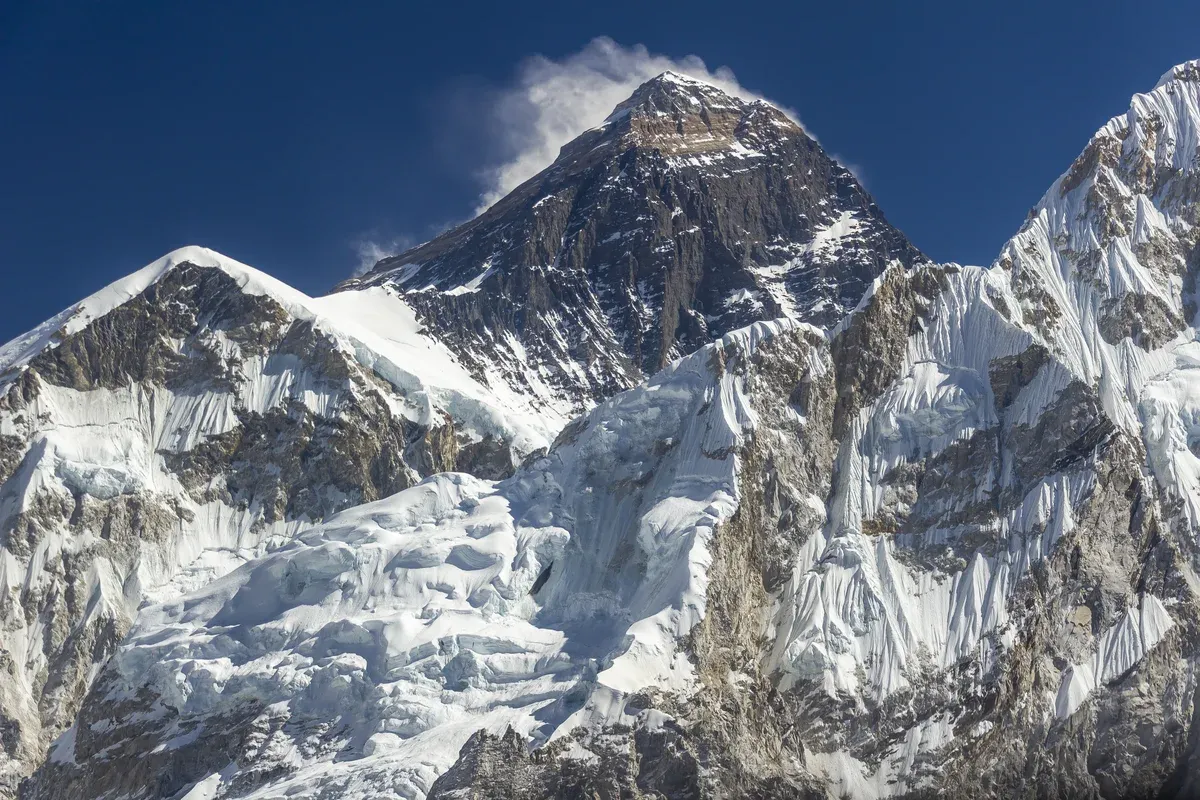
Everest from Kala Patthar. Photo: Bijay Chaurasia, CC BY-SA 4.0, via Wikimedia Commons
Quick answer Kala Patthar in brief
Kala Patthar is usually listed at 5,545 to 5,550 m (18,192 to 18,209 ft), above Everest Base Camp at 5,364 m. The climb from Gorak Shep takes 1.5 to 2 hours and needs no separate climbing permit. From the top you see Everest, Nuptse, Changtse and Pumori, a sight that base camp itself does not give because Nuptse blocks Everest.
Key takeaways
- The full route up to the viewpoint is set out in the Everest Base Camp trek guide.
- Short on time? The Everest Base Camp Helicopter Landing tour lists a Kala Patthar landing, weather permitting.
- Compare every option in the comparison table and cost sections of Everest climbing tours.
- Pre-dawn temperatures up there hit minus 10 to 15 degrees, so see the packing advice under seasons, Lukla flights and altitude.
What Kala Patthar Is
A rocky ridge beside the Khumbu Glacier and the highest point of the classic base camp route.
How High Is It
The height of Kala Patthar depends on who you read, and the gap is worth knowing before you claim a personal best. Wikipedia gives the usual figure as 5,545 to 5,550 m (18,192 to 18,209 ft) but records GPS readings far higher, including 5,644.5 m (18,519 ft) in 2008. The Three Passes trek page of We Seek Travel lists it at 5,643 m as the highest point of that route. Wikipedia attributes the discrepancy to different measured points and notes, with a citation-needed tag, that the prayer-flag summit measures above the 5,545 m ridge point. The table below puts the main points of the area side by side from the same sources.
No climbing permit is needed for Kala Patthar, which Wikipedia calls the highest altitude most people reach without one. Only the two standard trek permits for the Khumbu apply, the Sagarmatha National Park entry and the Khumbu Pasang Lhamu Rural Municipality fee, according to Nepal Hiking Team.
| Point | Height | Source |
|---|---|---|
| Kala Patthar | 5,545 to 5,550 m (18,192 to 18,209 ft), GPS readings to 5,644.5 m (18,519 ft) | Wikipedia |
| Kala Patthar, alternate figure | 5,643 m | We Seek Travel, Three Passes trek |
| Gorak Shep, trailhead | 5,164 m (16,942 ft) | Wikipedia |
| Everest Base Camp, Nepal side | 5,364 m (17,598 ft) | Wikipedia |
| Mount Everest | 8,848.86 m (29,031.7 ft), 2020 Nepal and China survey | Wikipedia |
What You See and Why It Beats Base Camp
The reason trekkers drag themselves up a dark hill at four in the morning is simple: from base camp you mostly cannot see Everest. Wikipedia explains that Nuptse blocks Everest's high summit from much of the region, and Nepal Hiking Team says the view of the mountain is almost completely blocked at base camp. Holy Mountain Treks puts it the other way round: Everest is the sight not visible from base camp itself.
From the summit of Kala Patthar the line-up runs Everest at 8,848.86 m (29,031.7 ft), Nuptse at 7,861 m, Changtse at 7,543 m and Lhotse's northern flank at 8,516 m, with Pumori at 7,161 m and Ama Dablam at 6,812 m also visible according to Nepal Hiking Team. Holy Mountain Treks adds the Khumbu Glacier and Khumbu Icefall below, and one source lists Changtse at 7,583 m rather than 7,543 m. Wikipedia adds that the hill's prominence is only 10 m, so the climb is short but the position is what matters. The view is the most accessible close-up of Everest there is without a climbing permit, which is why treks such as the Everest Base Camp 12 Days trek and the Everest Three Passes Trek build in the climb.
Sources: Wikipedia, Nepal Hiking Team
The Climb from Gorak Shep
A short, steep and very cold walk that most trekkers do once, either before breakfast or in the late afternoon.
Time, Distance and Effort
The trail starts at Gorak Shep, given as 5,163 m on the Wikipedia Kala Patthar page and 5,164 m on the Gorak Shep page. Wikipedia says the ascent usually takes 1.5 to 2 hours, and starting from Lobuche instead adds two to three hours one way. Nepal Hiking Team puts the distance from Gorak Shep at roughly 2 km with a descent of around an hour, and Holy Mountain Treks gives a round trip of 3.7 km with 420 m of elevation gain in about 2 hours.
The final stretch is a 5 to 10 minute boulder scramble to the prayer-flag summit, per Wikipedia. For comparison, the walk from Gorak Shep to Everest Base Camp takes 1.5 to 2.5 hours according to Wikipedia, so the side trips are comparable walks.
| Figure | Value | Source |
|---|---|---|
| Ascent from Gorak Shep | 1.5 to 2 hours | Wikipedia |
| Round trip distance | 3.7 km with 420 m of gain | Holy Mountain Treks |
| Distance from Gorak Shep | about 2 km | Nepal Hiking Team |
| Descent | around 1 hour | Nepal Hiking Team |
| Final scramble | 5 to 10 minutes | Wikipedia |
Sunrise Against Sunset
Both starts work and both have a cost. Nepal Hiking Team says sunrise climbers leave around 4:00 to 4:30 AM and sunset climbers start 4:00 to 5:00 PM. Sunset brings fewer crowds but more afternoon cloud and wind.
Holy Mountain Treks recommends the morning hike because evening cloud is common and there is a risk of walking the last stretch in the dark, saving sunset for a clear forecast and the alpenglow it can produce. The pre-dawn cold is real: Nepal Hiking Team says temperatures regularly hit minus 10 to minus 15 degrees. Kandoo Adventures lists base camp nights at minus 17C in March and minus 8C in May, and Everest Trekking Routes lists base camp night lows of minus 25C from December to February, so dress for the worst month you trek in.
Sunrise is the pick for most people, and the viewpoint is a stop on treks such as Island Peak and EBC Climb.
Altitude Advice
At roughly 5,545 m you are higher than the Nepal base camp at 5,364 m and breathing air with far less oxygen than at sea level. Altitude sickness typically occurs only above 2,500 m and symptoms often show within ten hours of ascent, per Wikipedia. Headache, nausea, fatigue, dizziness and poor sleep are the AMS signs listed by Himalayan Hero, which advises limiting sleeping-altitude gains to 300 to 500 m per day above 3,000 m and never ascending with worsening symptoms, while HACE needs immediate descent.
Wikipedia advises no more than 300 m of sleeping gain per day above 3,000 m. The practical rule for Kala Patthar: reach Gorak Shep after proper acclimatisation days lower down, climb slowly, and turn back if symptoms worsen. The aid post at Pheriche, manned twice yearly in trekking season by volunteer doctors of the Himalayan Rescue Association, sits on the route below.
Sources: Wikipedia, Nepal Hiking Team
KALA PATTHAR & MT. EVEREST | MOST EPIC SUNRISE OF MY LIFE
The pre-dawn climb from Gorak Shep and the sunrise on Everest. Third-party video by Jackson Groves. This site did not shoot it and has no relationship with the creator.
Landing by Helicopter
If you cannot spare the trekking days, a handful of helicopter tours put you on the ridge for a few minutes.
The Tours That Land There
Two bookable listings in this site's comparison name a Kala Patthar landing, and a third uses a helicopter on the way down. The Everest Base Camp Helicopter Landing tour costs $1,600 per person, runs 5 to 6 hours from Kathmandu, seats five passengers per helicopter and includes hotel pickup, with national park fees, municipal tax and airport tax not included. The Everest View Hotel Helicopter Breakfast tour costs $1,352 per person, runs 6 hours, and offers a Kala Patthar or base camp landing weather permitting, with breakfast at Everest View Hotel at 3,880 m. The EBC Trek with Helicopter Return trek costs $2,250 per person over 12 days and finishes with the helicopter from Gorak Shep to Lukla instead of a landing, which suits trekkers who climb on foot first.
Ground time at the top is short. Amazing Nepal Trek lists 8 to 10 minutes on the ground in its itinerary and 10 to 15 minutes in its information section, so the operator itself disagrees. Alpine Adventure Club says its landing there is subject to weather and local government permission and gives no time limit. Landings are also restricted by rule: Nepal's National Park Authority told operators that regular flights may land only at Lukla, Namche and Syangboche, with flyovers of Kala Patthar and base camp permitted, reports Onlinekhabar, which notes the Park Authority became much stricter after a helicopter crash in the region killed six people. Treat a landing as possible, never as certain.
When you weigh the flight against the trek, remember the trek versions cover the climb on foot: the 14-day Everest Base Camp Trek 14 Days at $1,800 per person lists Kala Patthar at 5,555 m as its maximum altitude. Operator pages outside this catalog quote other helicopter prices, and only the US dollar card prices here are bookable trip prices.
Sources: Onlinekhabar, Amazing Nepal Trek
Do and Don't at Kala Patthar
Rules of thumb drawn from the sources above.
Do
- Do start the climb from Gorak Shep and allow 1.5 to 2 hours up and about an hour down, because Wikipedia and Nepal Hiking Team both give those times.
- Do pick sunrise around 4:00 to 4:30 AM if you want the clearest chance, because Holy Mountain Treks reports evening cloud is common.
- Do dress for minus 10 to minus 15 degrees, because Nepal Hiking Team says pre-dawn temperatures regularly reach that and Everest Trekking Routes lists base camp night lows of minus 25C in winter.
- Do walk slowly and keep the day's sleeping gain within 300 to 500 m above 3,000 m, per Himalayan Hero and Wikipedia, since the summit sits near 5,545 m.
- Do carry the two standard Khumbu permits, because Nepal Hiking Team says Sagarmatha National Park and the Pasang Lhamu fee cover Kala Patthar with no separate permit.
Don't
- Don't expect to see Everest's summit from base camp itself, because Nuptse blocks it, which is why Wikipedia and Holy Mountain Treks both send you up the ridge instead.
- Don't plan a sunset climb in poor weather, because Holy Mountain Treks warns of cloud, wind and hiking in the dark.
- Don't book a helicopter landing as a certainty, because Alpine Adventure Club makes it subject to weather and government permission and the Park Authority restricts landings after the 2023 crash, per Onlinekhabar.
- Don't keep climbing with worsening headache, nausea or dizziness, because Himalayan Hero lists those as AMS signs and says worsening symptoms mean no ascent.
Kala Patthar Questions
Is Kala Patthar higher than Everest Base Camp?
Yes. Kala Patthar is commonly listed at 5,545 to 5,550 m while the Nepal base camp is 5,364 m (17,598 ft), so the viewpoint sits higher. See the height table in What Kala Patthar Is.
How long does it take to climb Kala Patthar?
Wikipedia gives 1.5 to 2 hours up from Gorak Shep, and Nepal Hiking Team adds about an hour down over roughly 2 km. The full approach from Lukla is covered in the Everest Base Camp trek guide.
Do I need a permit for Kala Patthar?
No separate permit exists. Wikipedia notes no climbing permit is needed, and Nepal Hiking Team says the Sagarmatha National Park entry and the Khumbu Pasang Lhamu fee cover it, and the Everest Base Camp 12 Days trek lists the Sagarmatha National Park entrance among its included permits.
Should I go for sunrise or sunset?
Sunrise climbers start around 4:00 to 4:30 AM and get steadier weather, while sunset from 4:00 to 5:00 PM brings fewer crowds but more cloud and wind, per Nepal Hiking Team. Morning is the recommendation of Holy Mountain Treks.
Can helicopters land on Kala Patthar?
Some tours include it, such as the Everest Base Camp Helicopter Landing trip at $1,600 per person, but Onlinekhabar reports the Park Authority restricts landings there to flyovers for regular flights, and Alpine Adventure Club makes any landing subject to weather and permission.
How cold does it get on Kala Patthar?
Nepal Hiking Team says pre-dawn temperatures regularly hit minus 10 to minus 15 degrees, and Everest Trekking Routes lists base camp night lows of minus 25C from December to February. Month-by-month figures sit under seasons, Lukla flights and altitude on the homepage.