 Everest Climbing Tours
Island Peak Climbing: 14-Day Guided Summit Tour
Island Peak climbing is the shortest route to a real Himalayan summit, and this listing from Accessible Adventure Pvt. Ltd on GetYourGuide does it in 14 days for $1,250 per person. You trek in from Lukla through Namche Bazaar and Dingboche, train with crampons and fixed rope at base camp, and set out for the summit at 6,189 m (20,306 ft) on day 9 with a spare weather day on day 10. The headline price is the lowest among the trekking peaks on the Everest climbing tours comparison, but the listing leaves the Lukla flights and the climbing permit to you. This page walks through the route, the inclusions and the catch before you book. See all Everest climbing tours side by side.
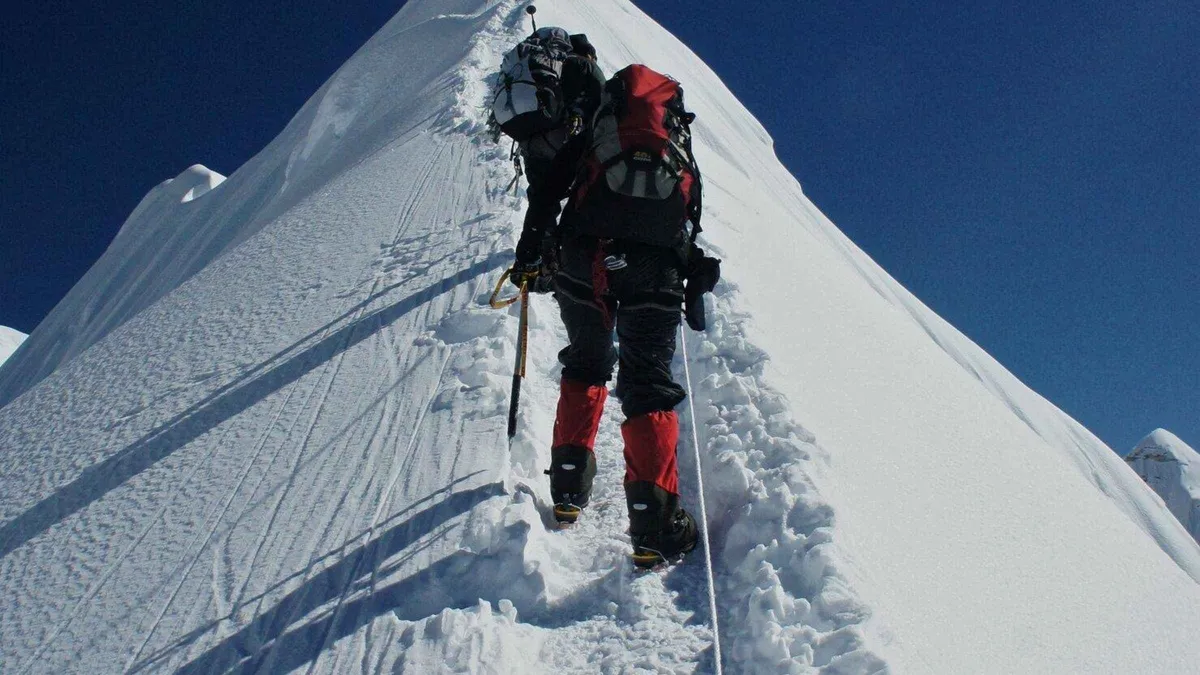
About This Tour
Accessible Adventure runs this as a private trip with a government-licensed English-speaking guide, one porter for every two clients and a climbing guide with more than 20 summits of experience. You sleep two nights in a deluxe Kathmandu suite home or similar, then in the best available local lodges on the trek and in tents at Island Peak base camp. Breakfast, lunch and dinner during the trek are covered.
The honest part first. The $1,250 from-price does not cover the round-trip Kathmandu to Lukla flights ($500 per person), the Island Peak climbing permit ($350, or $175 as written on the listing), the climbing guide insurance ($100) or tips. The listing has no separate excluded heading, so message the operator and confirm exactly what you pay before you book.
$1,250, private group, with guide, porters, lodge and tented accommodation, trek meals, trek permits already arranged and a $200 summit bonus included
14 days, 12 of them on the trail, summit day on day 9 and a spare weather day on day 10
Kathmandu, with airport and hotel transfers in a private vehicle
Island Peak (Imja Tse) summit, 6,189 m (20,306 ft) as the listing gives it, though some sources put the peak at 6,165 m (20,226 ft)
Lukla flights $500 per person, Island Peak climbing permit $350 or $175 as written, climbing guide insurance $100, personal costs, hot showers, Wi-Fi, drinks, tips
Free cancellation up to 24 hours before departure for a full refund
Check Dates and Availability
Departure times are shown once you check availability on the listing. Reserve now and pay later is offered.
Quick answer Price, length, summit height
This island peak climbing tour costs $1,250 per person for 14 days and tops out at 6,189 m (20,306 ft). It is a private trip from Kathmandu with a licensed guide, a climbing guide with 20+ summits, a $200 summit bonus included and a spare weather day for the summit. The Lukla flights ($500 per person) and the climbing permit ($350 or $175 as written) read as extra.
Key takeaways
- See the full breakdown in what the price covers before you budget.
- Walk the route in the route day by day, from Lukla to the summit push.
- If you want Everest Base Camp on the way, compare the Island Peak and EBC Climb instead.
- Check how this listing sits against the others on the Everest climbing tours homepage.
What the Price Actually Covers
The listing mixes included and excluded items across one list, so this table splits them out. Figures come from the listing itself, and the permit rates are in line with the $350 spring and $175 autumn, winter and summer figures that operator pages quote for peaks up to 6,500 m.
In the Price
You get the guides, the accommodation, the trek meals, the trekking-side paperwork and the summit bonus. That is a strong package for a private trip at $1,250 per person, the lowest trekking-peak price in the catalog.
Included on the permit side are the Sagarmatha National Park entry permit, the Khumbu Pasang Lhamu Rural Municipality fee, the NMA service charge, the SPCC fee and a $500 garbage deposit. A $200 summit bonus for the climbing team is also included, which some operators leave out.
| Line | In the price | Notes |
|---|---|---|
| Government-licensed English-speaking guide | Yes | Plus 1 porter for every 2 clients |
| Climbing guide | Yes | 20+ summits of experience, insurance not included |
| Accommodation | Yes | 2 nights deluxe Kathmandu suite home or similar, best available lodges, tents at base camp |
| Meals | Trek only | Breakfast, lunch and dinner during the trek |
| Sagarmatha National Park entry permit | Yes | Included |
| Khumbu Pasang Lhamu Rural Municipality fee | Yes | Included |
| NMA service charge and SPCC fee | Yes | Included |
| Garbage deposit | Yes | $500, included |
| Summit bonus | Yes | $200, included |
| Kathmandu to Lukla flights | No | $500 per person, round trip |
| Island Peak climbing permit | No | $350, or $175 as written on the listing |
| Climbing guide insurance | No | $100 |
| Porter for a solo traveler | No | Solo travelers pay extra |
| Wi-Fi, drinks, laundry, hot water, hot showers, phone calls | No | Personal expenses on the trail |
| Alcoholic drinks and tips | No | Budget for them |
Budget Beyond the From-price
Add the $500 flights, the permit and the $100 guide insurance to your own budget, plus teahouse extras. Trails guides put a twin-share lodge room at $5 to $10, meals at $7 to $12 each, a hot shower at $4 to $6 and charging at $3 to $7 where the listing does not already cover them. Never total it up from this page alone.
Confirm the exact excluded list with Accessible Adventure in writing, because the listing has no separate excluded heading and the permit figure appears in two places.
- Round-trip Kathmandu to Lukla flights: $500 per person, listed as not included
- Island Peak climbing permit: $350, or $175 as written, listed as not included
- Travel insurance for the climbing guide: $100, listed as not included
- Tips, drinks, Wi-Fi, laundry, hot showers and phone calls
Sources: Wikipedia, Mount Everest, Wikipedia, Sagarmatha National Park
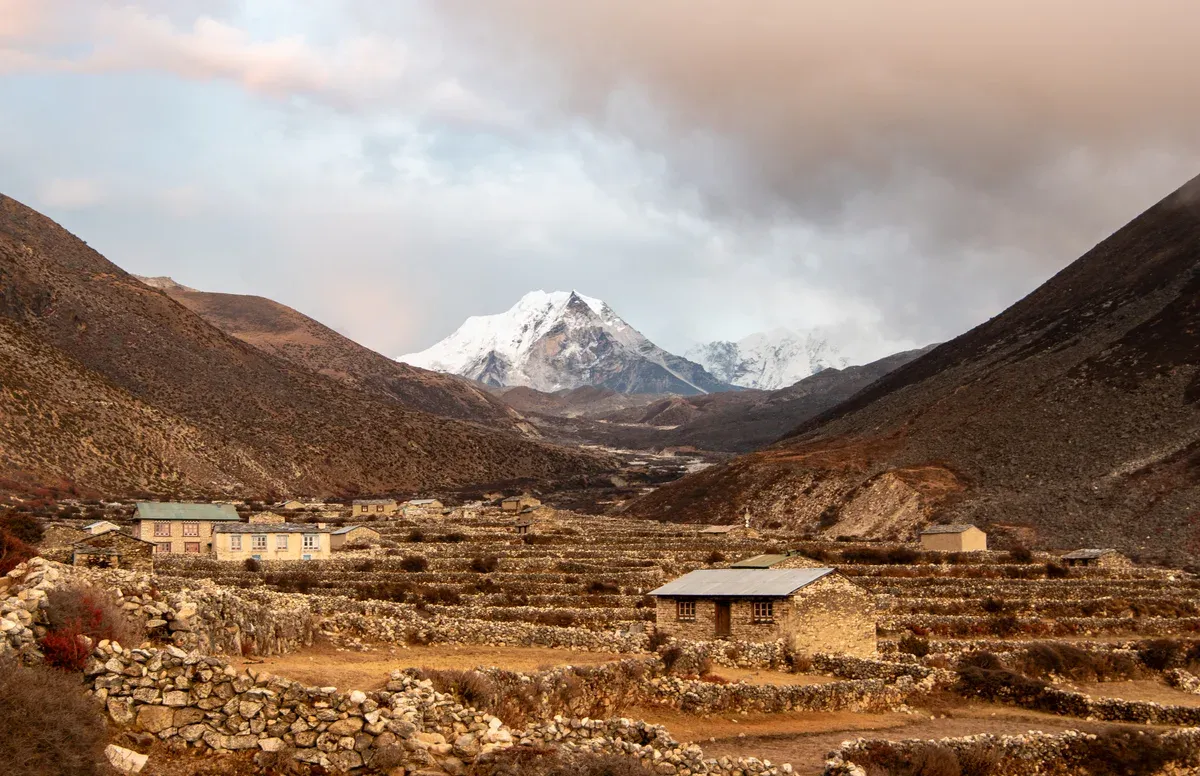
Island Peak (Imja Tse) from Dingboche. Photo: Rohit Sharma, CC BY-SA 4.0, via Wikimedia Commons
The Route Day by Day
The listing describes a 12-day trail inside a 14-day trip: fly to Lukla, trek the classic Khumbu trail through Namche Bazaar and Dingboche, then turn to Chhukung and Island Peak base camp for training and the summit. Heights below come from the listing where it gives one and from published reference material otherwise.
How the Days Run
You start in Kathmandu with airport and hotel transfers in a private vehicle, then take the short flight to Lukla at 2,846 m (9,337 ft). The trail climbs to Namche Bazaar at 3,440 m (11,290 ft), where standard itineraries put an acclimatization day, and continues to Dingboche at 4,360 m (14,305 ft) on the listing, where many Khumbu treks add a second acclimatization stop but this listing names only the Namche day. From Dingboche the route moves to Chhukung at 4,730 m (15,519 ft), then to Island Peak base camp at 5,200 m (17,061 ft) for pre-climb training with crampons, harness and fixed rope.
Summit day is day 9 and the top sits at 6,189 m (20,306 ft) as the listing prints it. Day 10 is kept free for bad weather, which is the single best feature of this itinerary, because Lukla and summit windows both move with conditions. You then walk back out and fly to Kathmandu. In peak season the Lukla flight may operate from Ramechhap airport, about 130 to 140 km and 4 to 5 hours by road from Kathmandu, so read your flight documents carefully.
| Day | Route | Height on the listing |
|---|---|---|
| 1 | Arrival in Kathmandu | 1,338 m (4,390 ft) |
| 2 | Fly to Lukla, trek to Phakding | 2,800 m (9,187 ft) |
| 3 | Phakding to Namche Bazaar | 3,438 m (11,280 ft) |
| 4 | Acclimatization day in Namche Bazaar | 3,438 m (11,280 ft) |
| 5 | Namche Bazaar to Tengboche | 3,870 m (12,697 ft) |
| 6 | Tengboche to Dingboche | 4,360 m (14,305 ft) |
| 7 | Dingboche to Chhukung | 4,730 m (15,519 ft) |
| 8 | Chhukung to Island Peak Base Camp, climbing training | 5,200 m (17,061 ft) |
| 9 | Summit day, then back to base camp | 6,189 m (20,306 ft) |
| 10 | Contingency and weather reserve day | Not stated |
| 11 | Chhukung to Namche Bazaar, 5-6 hrs | Not stated |
| 12 | Namche Bazaar to Lukla, 6-7 hrs | Not stated |
| 13 | Fly from Lukla to Kathmandu | 1,338 m (4,390 ft) |
Heights You Will See Printed Elsewhere
Sources disagree on the summit height. Wikipedia puts Island Peak at 6,165 m (20,226 ft) while the listing and several operator pages use 6,189 m. Bring both numbers if a travel insurer or a permit form asks for the peak height.
6,165M Up in the Himalaya - Island Peak Climb
A climb of Island Peak with the headwall and the ridge. Third-party video by Cam Bostock. This site did not shoot it and has no relationship with the creator.
Who This Trip Rules Out
The listing states clear limits, and some of them are firmer than they look. Match yourself against them before you pay, because weather, altitude and paperwork make this a poor first big trip for some travellers.
Stated Limits and Honest Gaps
The booking age band excludes children under 14, and the listing also says it is not suitable for pregnant women, wheelchair users or people over 95. A good level of physical fitness is required, and the trip reaches 6,189 m (20,306 ft), where altitude decides the summit more than fitness does. It is a private group with the size not stated, so ask how many people join if that matters to you.
The from-price gap is the biggest practical filter. If you want the $500 Lukla flights, the permit, the guide insurance and a porter included, the Island Peak and EBC Climb at $2,899 for 20 days bundles a base camp trek with permits and flights in the price. Solo travelers pay extra for a porter here. Cancellation is free up to 24 hours before departure, which is generous, but confirm the permit refund position with the operator.
- Children under 14, pregnant women, wheelchair users and people over 95 are excluded by the listing
- A good level of physical fitness is required, with no prior climbing experience stated as a condition
- The climbing permit is listed as extra, so check your own paperwork covers a peak at 6,189 m or 6,165 m depending on the source you use
- If you want the permits in the price, compare the Three Peaks Climbing Trip or the Mera Peak Climbing listings instead
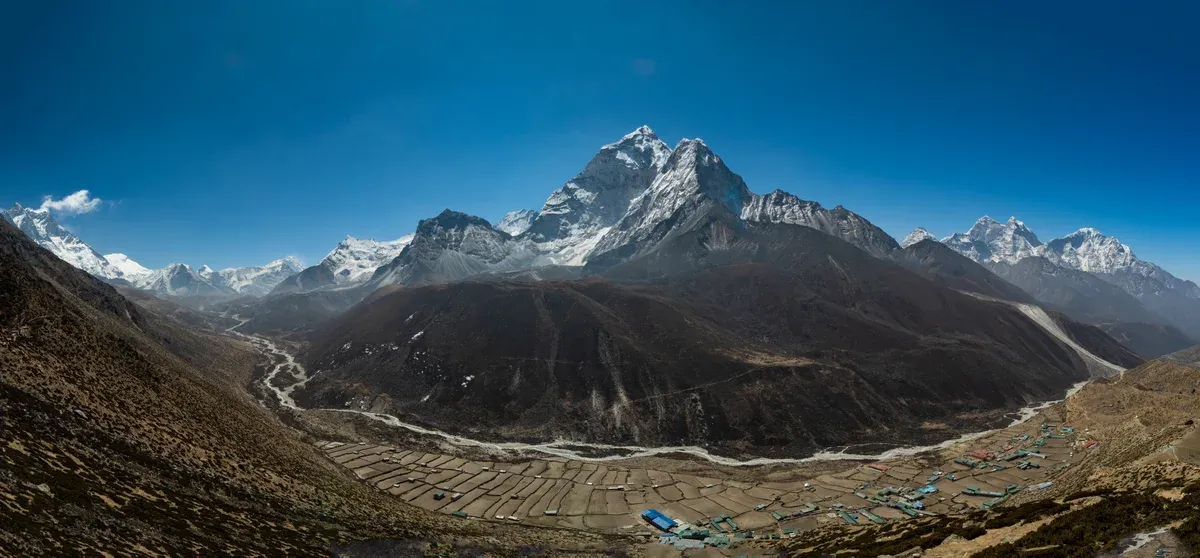
Dingboche at 4,440 m by the photographer's caption, with the Mahalangur Himal behind. Photo: Nirojsedhai, CC BY-SA 4.0, via Wikimedia Commons
Altitude, Season and Paperwork
Three things decide whether this climb happens: the season, your acclimatization and your documents. The figures below come from published guides and reference sources, not from the listing.
Season
The Everest region runs a spring season from March to May and an autumn season from September to November. At Everest Base Camp height, one operator lists night lows reaching -17C in March, -8C in May and -9C in October, and November drops to -12C. Monsoon from June to August brings most of Nepal's rain and cancels about half of Lukla's flights through poor visibility.
December to February is the off-season, when high routes go quiet. Autumn sits inside the $175 permit band and spring inside the $350 band, so the season you pick changes your permit bill.
| Factor | What the sources say |
|---|---|
| Best months | March to May and September to November |
| Monsoon | June to August, about half of Lukla flights cancelled by visibility |
| Permit rate by season | $350 in spring, $175 in autumn, winter and summer, for peaks up to 6,500 m, though some operator pages print higher spring figures |
Altitude and Acclimatization
Altitude sickness typically occurs above 2,500 m and symptoms often show within ten hours of ascent. Watch for headache, nausea, fatigue, dizziness and poor sleep. Standard advice is to limit sleeping-altitude gain to about 300 to 500 m per day above 3,000 m, use climb high, sleep low, and take roughly one acclimatization day per 1,000 m gained.
Acetazolamide at 125 mg twice daily, started about 24 hours before ascent, is the usual preventive, and you should discuss it with your own doctor. This itinerary names an acclimatization day at Namche Bazaar, and day 10 is held as a spare weather day for the summit. Severe symptoms such as confusion or loss of coordination mean immediate descent.
- Limit sleeping gains to about 300-500 m per day above 3,000 m
- Use climb high, sleep low, and rest roughly one day per 1,000 m gained
- HACE symptoms mean immediate descent, no exceptions
Flights, Permits, Visa and Insurance
Tenzing-Hillary Airport at Lukla has a 527 m (1,729 ft) runway with an 11.7% gradient, and strong southwest winds usually close it from mid to late morning, so flights are scheduled early. In peak season, flights may shift to Ramechhap, 130 to 140 km from Kathmandu or 4 to 5 hours by road, with a 12-minute flight to Lukla instead of the 35 minutes from Kathmandu. Build delay days into your plan rather than booking an international connection for the day you land.
On paperwork, this listing includes the Sagarmatha National Park entry permit and the Khumbu Pasang Lhamu fee, and leaves the Island Peak climbing permit to you. Nepal's tourist visa on arrival costs $30 for 15 days, $50 for 30 days and $125 for 90 days, extendable up to 150 days within a visa year. Insurance is the one item you must not skip: helicopter evacuation from a trekking peak above 6,000 m runs about $10,000 to $15,000 or more, and guides advise cover of at least 7,000 m for Island Peak (6,189 m). Read the Everest Base Camp trek and Lukla airport guides before you fly.
Trip Phases
The listing numbers the trail days but prints few clock times, so the phases below follow its own day numbers where it gives them.
-
Arrival
Kathmandu
Airport and hotel transfers in a private vehicle. Two nights in a deluxe Kathmandu suite home or similar.
-
Flight in
Kathmandu to Lukla
The round-trip flight costs $500 per person and is not in the from-price. In peak season it may leave from Ramechhap instead of Kathmandu.
-
Trek in
Lukla to Dingboche
The trail climbs through Namche Bazaar at 3,440 m (11,290 ft) and on to Dingboche at 4,360 m (14,305 ft) on the listing, with an acclimatization day at Namche.
-
Trek in
Dingboche to base camp
From Chhukung the group moves to Island Peak base camp and trains with crampons, harness and fixed rope under the climbing guide.
-
Day 9, summit day
Island Peak (Imja Tse)
The climb to the summit at 6,189 m (20,306 ft) as the listing gives it. Weather and altitude decide whether it happens, not the schedule.
-
Day 10, buffer
Spare weather day
Held free for bad weather. If the summit was not possible on day 9, the team can use it for another attempt.
-
Return
Out to Lukla and Kathmandu
The group treks back to Lukla and flies to Kathmandu, with the trip closing there.
What Works and What Does Not
A straight reading of the listing, with the gaps named.
What we genuinely like
- The lowest trekking-peak price in the catalog at $1,250 per person for a private trip
- A climbing guide with 20+ summits and a $200 summit bonus already included
- Spare weather day on day 10 for the summit push
- Trek permits, national park entry, rural municipality fee, SPCC fee and the $500 garbage deposit are all included
- Free cancellation up to 24 hours before departure
The honest downsides
- The Lukla flights ($500 per person), the Island Peak climbing permit ($350 or $175 as written) and the climbing guide insurance ($100) all read as not included
- The listing has no separate excluded heading, so the included and excluded lists overlap and need written confirmation from the operator
- Solo travelers pay extra for a porter
- The listing prints two different permit figures and two summit heights appear across sources, 6,189 m and 6,165 m
- Lukla flights cancel often in poor visibility and may leave from Ramechhap in peak season
Who it's NOT for: Anyone who wants one price covering flights, permits, insurance and a solo porter should book the Island Peak and EBC Climb instead.
Island Peak Climbing Questions
How much does this island peak climbing trip really cost?
The listing price is $1,250 per person for 14 days, and the flights, permit and guide insurance are listed separately, so read what the price covers and confirm the excluded list with the operator in writing before booking.
How hard is Island Peak to climb?
The listing requires a good level of physical fitness and no prior climbing experience is stated, with training in crampons, harness and fixed rope at base camp, and the summit at 6,189 m (20,306 ft) where altitude matters more than fitness, as explained in altitude, season and paperwork.
Is a beginner able to join this climb?
No prior experience is stated as a condition and the climbing guide teaches rope work at base camp, but a beginner should first compare the guided training and fuller package on the Island Peak and EBC Climb page before choosing.
What happens if the weather stops the summit?
Day 10 is held as a spare weather day, which is the itinerary's buffer, but no summit can be promised because weather and altitude decide, and the route day by day shows how the schedule handles it.
Do I need the Lukla flight and the permit separately?
Yes, the listing puts the round-trip Kathmandu to Lukla flights at $500 per person and the climbing permit at $350 or $175 as written in the not-included part, while the trekking permits are covered, as broken down in what the price covers.
Which other trekking peaks can I compare this with?
The nearest alternatives are Mera Peak Climbing in the Hinku valley and the Three Peaks Climbing Trip which adds Lobuche Peak, and all trekking-peak listings sit together on the Everest climbing tours homepage.
What insurance do I need for Island Peak?
Guides advise cover of at least 7,000 m for Island Peak (6,189 m), because a helicopter evacuation from a trekking peak above 6,000 m runs about $10,000 to $15,000 or more, and the practical detail sits in altitude, season and paperwork.
What Travelers Said
It was an amazing experience, the Sherpas and porters were extremely friendly and professional and ensured we were safe and had an amazing time. Would definitely go back and do it again !
Company was fantastic and everything was organised well for us.
Prices, availability and terms are set by the operator and confirmed at checkout.
We may earn a commission if you book through one of our links, at no extra cost to you. Full affiliate disclosure